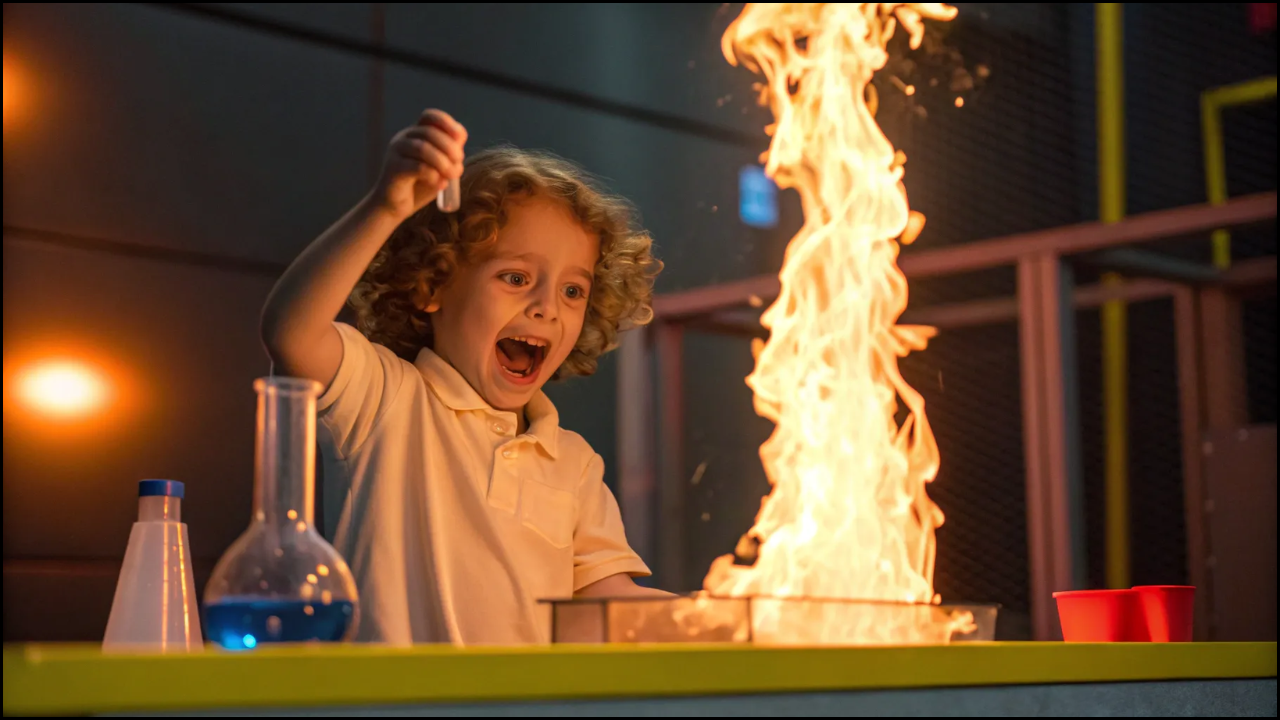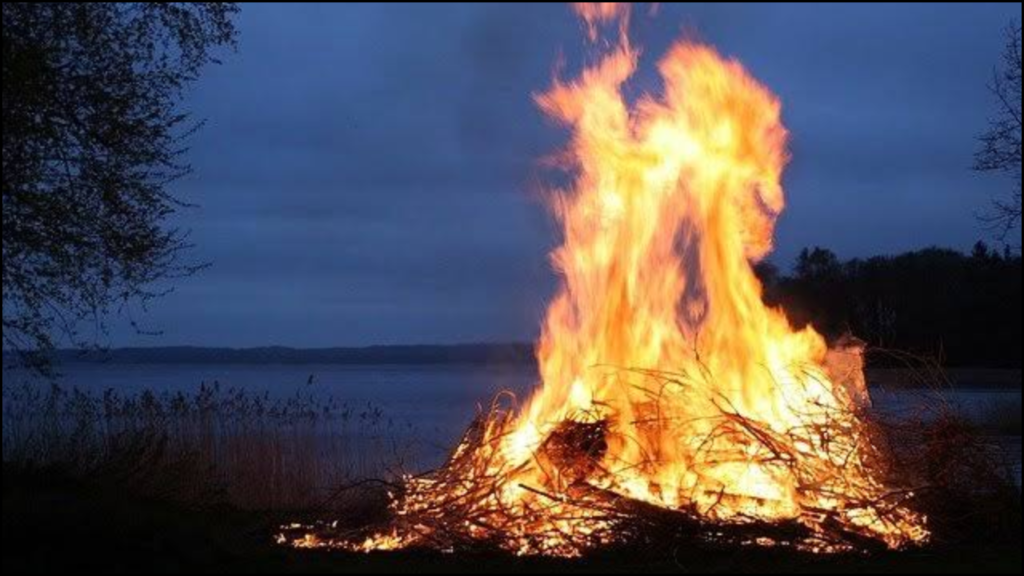
Fire is not just a visual spectacle—it follows the laws of physics. One of the most noticeable behaviors of fire is how flames and sparks consistently move upward. This phenomenon is governed by the principles of heat transfer, air movement, and combustion dynamics. Understanding why fire behaves this way provides insight into everyday experiences and helps prevent accidents in homes and fire-prone areas.
Table of Contents
Overview: Fire Behavior
| Aspect | Details |
|---|---|
| Main Cause | Hot air rises due to lower density |
| Spark Movement | Sparks carried upward by heated air |
| Flame Direction | Flames follow convection currents |
| Safety Concern | Sparks and flames can ignite materials |
| Learning Value | Demonstrates physics principles in real life |
Heat Transfer
The rising motion of flames and sparks is largely due to heat transfer. As fire burns, it heats the surrounding air, causing the air to expand and become less dense. This less-dense hot air rises, creating an upward draft that carries both flames and sparks with it. This process, known as convection, is fundamental to many natural and engineered systems.
Observing heat transfer in fire allows students and hobbyists to see physics in action. Small, hot sparks rise quickly, while cooler or heavier particles may descend sooner. Demonstrations of this principle can illustrate the effect of temperature differences on air movement and particle behavior in a visually engaging way.
Combustion Dynamics
Combustion produces flames and sparks by releasing energy from burning materials. Sparks are small, hot fragments of combusted material, while flames represent the ongoing chemical reaction. The temperature and density of these particles, combined with the surrounding hot air, determine how high and fast they move.
Studying combustion dynamics provides insight into why some materials produce more sparks or taller flames than others. Controlled experiments can show variations in spark trajectory based on fuel type, particle size, and oxygen availability. This knowledge is essential for safe fire management and understanding natural fire behavior.
Air Currents
Air currents created by fire play a critical role in directing sparks and flames. As hot air rises, it creates convection currents that draw surrounding air into the fire. This upward flow propels flames and sparks, giving fire its familiar rising appearance. External airflow, such as wind, can also alter the direction and speed of flames and sparks.
Understanding air currents is important for both safety and scientific observation. Educators and safety instructors use demonstrations to show how ventilation, wind, and drafts influence fire behavior. Awareness of air movement helps prevent accidents in both indoor and outdoor fire settings.
Safety Measures
Fire’s upward movement makes sparks particularly hazardous, as they can ignite nearby flammable materials. Preventive measures include clearing combustible debris, maintaining safe distances, and using barriers when handling open flames. Knowledge of flame and spark physics supports safer practices in homes, campsites, and industrial environments.
Educational programs often simulate fire scenarios to illustrate spark behavior safely. By combining theoretical explanations with hands-on observation, participants learn both the science and safety of fire. This dual approach ensures that curiosity about fire is paired with responsible handling.
Educational Insights
Exploring why flames and sparks rise introduces students to foundational physics concepts such as convection, density differences, and heat transfer. Visual demonstrations make these ideas tangible and memorable. Understanding fire physics not only satisfies curiosity but also builds practical knowledge for safety and scientific exploration.
Experiments showing how sparks and flames respond to different fuels, airflows, and temperatures reinforce the connection between observation and theory. Students gain skills that can be applied to environmental studies, fire safety, and experimental physics.
Final Analysis
The physics of fire explains why flames and sparks always rise: hot air rises, convection currents form, and combustion generates energized particles. By studying these principles, learners gain insight into both natural phenomena and practical safety strategies. Knowledge of fire physics transforms a common observation into a scientific lesson with real-world applications, emphasizing curiosity, safety, and understanding of natural processes.