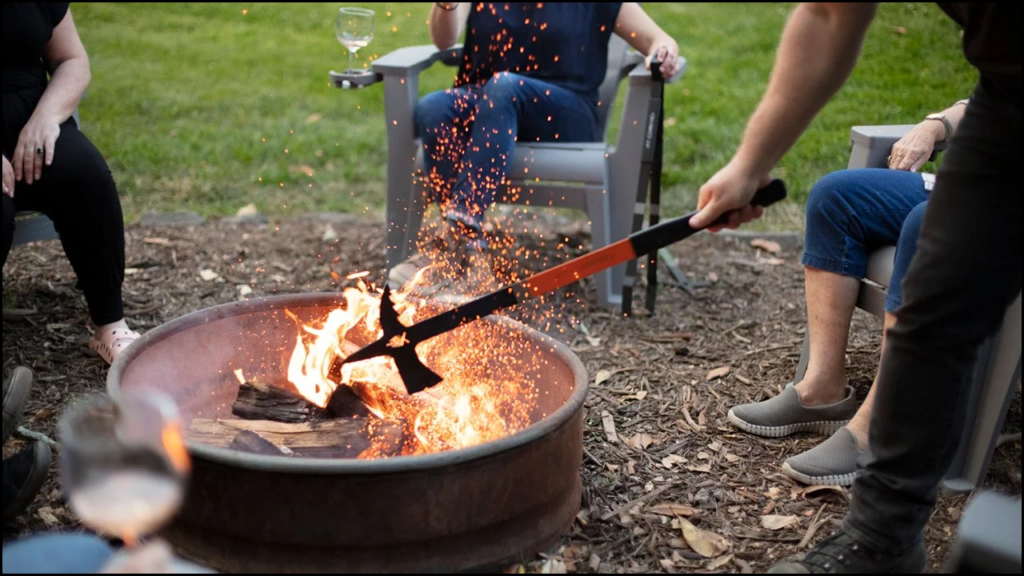
Campfires create warmth, light, and a sense of comfort, but they also produce sparks that can quickly become dangerous if not understood and managed properly. These glowing particles do not move randomly; their upward motion follows clear scientific principles linked to heat and air movement. Recognizing why sparks rise helps campers take smarter safety precautions.
In outdoor environments, uncontrolled sparks are a leading cause of accidental fires. Learning how spark behavior works and how to control it is essential for safe camping, forest protection, and responsible outdoor practices.
Table of Contents
Overview Of Campfire Sparks
| Aspect | Explanation |
|---|---|
| Spark Cause | Burning fuel releases hot particles |
| Upward Motion | Hot air lifts sparks vertically |
| Risk Areas | Dry grass, leaves, and wood |
| Wind Effect | Increases spark travel distance |
| Control Methods | Fire design and monitoring |
Spark Formation
Sparks form when small pieces of burning wood or ash break away from the main fire. These particles remain hot because they contain stored thermal energy from combustion. As they detach, they glow briefly before cooling down.
Different fuels produce different spark levels. Softwoods and dry materials tend to release more sparks than dense hardwoods. Understanding fuel choice plays a key role in reducing spark production at a campfire site.
Heat Convection
When a campfire burns, it heats the surrounding air rapidly. Hot air expands and becomes lighter than the cooler air around it. This lighter air naturally rises upward, creating a vertical airflow above the fire.
Sparks are carried along with this rising air. Convection acts like an invisible lift system, pulling sparks upward even though gravity is constantly trying to pull them down.
Air Density
Air density decreases as temperature increases. Heated air above a campfire has fewer molecules packed into the same space, making it lighter than the surrounding air. This density difference drives upward motion.
Because sparks are small and lightweight, they respond easily to changes in air density. Even gentle upward airflow can lift them high enough to escape the immediate fire area.
Upward Forces
- Buoyant force lifts sparks with hot air
- Gravity pulls sparks downward continuously
- Heat-driven lift often exceeds gravity
- Strong fires create stronger upward airflow
- Cooling reduces upward movement
The balance between buoyancy and gravity determines how far sparks rise. As long as sparks stay hot and surrounded by rising air, they continue moving upward.
Wind Influence
Wind adds another layer of risk to campfire sparks. Once sparks rise, wind can push them sideways into nearby vegetation or campsites. Even light breezes can carry sparks beyond safe distances.
Changing wind direction makes spark behavior unpredictable. This is why campfires should never be left unattended, especially during windy conditions.
Fire Placement
Choosing the right location for a campfire greatly reduces spark danger. Open areas with minimal vegetation limit ignition risk if sparks escape. Fire pits surrounded by non-flammable surfaces provide added protection.
Campfires built too close to dry grass, trees, or tents increase the chance of accidental ignition. Proper spacing is a fundamental spark-control strategy.
Fuel Selection
- Use dry, seasoned hardwood
- Avoid resin-rich softwood
- Do not burn trash or plastics
- Keep fuel pieces small and controlled
- Remove loose bark and debris
Fuel choice directly affects spark production. Cleaner-burning wood produces fewer sparks and creates a more manageable fire.
Fire Size
Large fires generate stronger convection currents, lifting sparks higher into the air. Smaller, well-contained fires are easier to manage and significantly safer.
Keeping flames at a moderate height reduces heat intensity and limits upward airflow. A controlled fire is both safer and more efficient for cooking and warmth.
Spark Control Methods
Physical controls help limit spark spread. Fire rings, spark screens, and metal grates reduce the number of particles that escape into the air.
Water and soil should always be nearby to manage unexpected flare-ups. Extinguishing rising sparks early prevents them from landing on flammable materials.
Monitoring Practices
Constant supervision is critical for campfire safety. Sparks can rise and ignite materials silently, without immediate visible flames.
Regularly checking the surrounding area for glowing embers ensures early detection. Safe camping depends on active awareness rather than passive observation.
Fire Extinguishing
Proper extinguishing prevents delayed ignition. Campfires should be fully cooled before leaving the area. Stirring ashes and adding water ensures no hidden heat remains.
A fire that looks extinguished can still produce sparks if embers remain hot. Complete cooling is the final step in spark control.
The Bottom Line
Sparks rise from campfires because hot air created by combustion is lighter and moves upward, carrying small burning particles along with it. Wind, fuel choice, and fire size can turn these sparks into serious hazards if left unmanaged. By understanding spark behavior and applying proper control methods, campers can enjoy fires safely while protecting people, property, and natural environments.