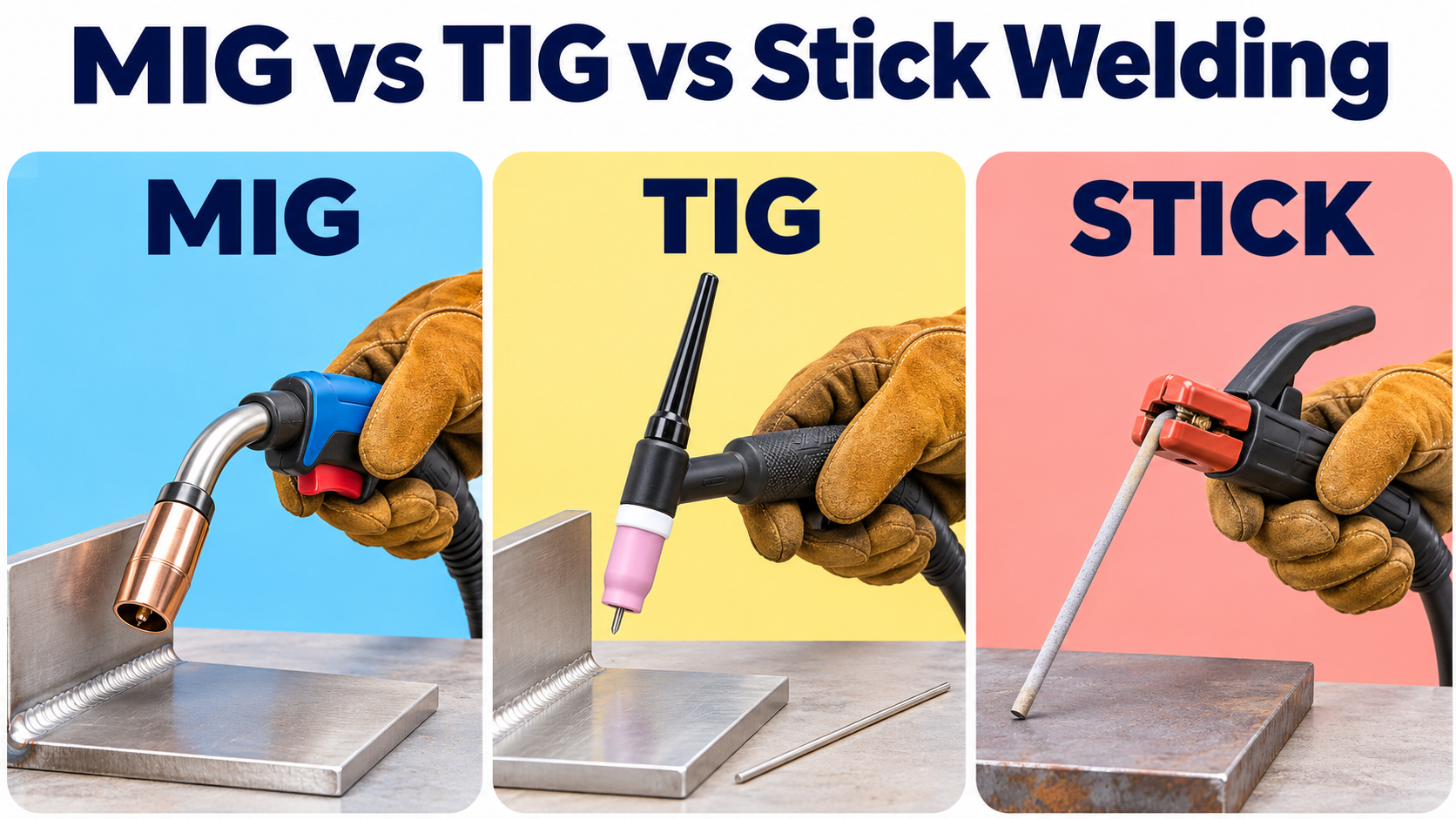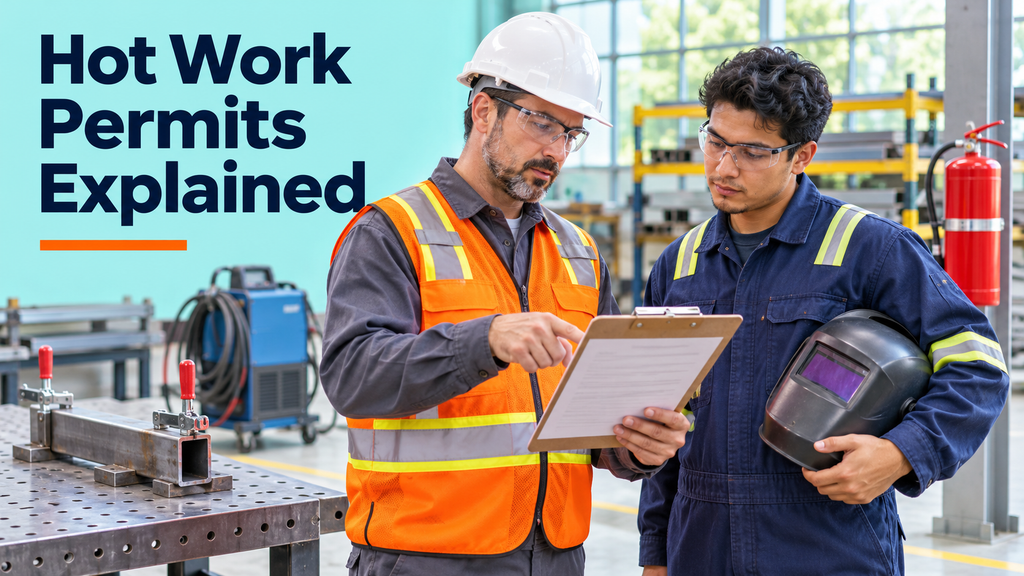
Hot work is one of the leading causes of fires in factories, construction sites and commercial buildings. A hot work permit is the written control that makes sure the risks are checked and managed before any sparks fly.
Welding, cutting, grinding and similar tasks produce heat, flames and sparks that can ignite materials far from the work area, sometimes hours after the job ends. A permit system forces a pause before work starts so that someone checks the area, removes or protects combustibles, assigns a fire watch and confirms fire protection is working. This guide explains what hot work is, which regulations and standards apply, who is involved in the permit process, what a permit contains and how to run a system that actually prevents fires.
Table of Contents
What Counts as Hot Work
Hot work is any task that involves open flames or produces heat or sparks capable of starting a fire. Common examples include:
- Arc and gas welding.
- Oxy-fuel and plasma cutting.
- Brazing and soldering.
- Grinding and abrasive cutting.
- Torch-applied roofing.
- Thawing frozen pipes with a torch.
- Heat treating and hot riveting.
Work carried out in a permanent, purpose-built welding shop or designated hot work area, built from non-combustible materials and free of combustibles, usually does not need a permit for each job. Permits are required whenever hot work takes place outside these designated areas.
Regulations and Standards That Apply
In the United States, OSHA sets legal requirements for hot work. The general industry rules for welding, cutting and brazing appear in 29 CFR 1910.252, while construction work is covered by 29 CFR 1926 Subpart J. These rules require fire hazards to be removed or protected, fire watches where needed and written authorisation before cutting or welding in areas not designed for it.
The most widely followed detailed guidance is NFPA 51B, the Standard for Fire Prevention During Welding, Cutting, and Other Hot Work, published by the National Fire Protection Association. Many local fire codes adopt it, and property insurers frequently require policyholders and contractors to follow it. Other countries have similar rules, such as workplace fire safety regulations and insurer-led hot work standards in the UK, Canada and Australia.
Insurance is a major driver of hot work controls. Many commercial property policies include hot work conditions, and contractors are often required to show they follow a permit system before they are allowed on site. Failing to follow these conditions can complicate a claim after a fire.
Key Roles in the Permit Process
A hot work permit system works because responsibilities are clearly split between different people.
| Role | Main Responsibility | Key Point |
|---|---|---|
| Permit authorising individual | Inspects the site and signs the permit | Can refuse or stop work |
| Hot work operator | Performs the work safely | Follows all permit conditions |
| Fire watch | Watches for fire during and after work | No other duties |
| Site management | Sets the hot work program | Trains and audits |
Permit Authorising Individual
This person, often a supervisor, safety manager or facilities manager, is responsible for checking the site before work begins and deciding whether hot work can proceed safely. They should first ask whether the job can be done another way, such as with mechanical fasteners, a cold-cutting method or by moving the item to a designated shop. Avoiding hot work entirely is the safest option.
Hot Work Operator
The welder, fitter or roofer must understand the permit conditions, check that precautions are in place before starting and stop work if conditions change. Operators should never begin until the permit is signed and the fire watch is present.
Fire Watch
The fire watch is a trained person whose only job is to look for fires during the work and for a set period afterwards. They must have a suitable fire extinguisher at hand, know how to raise the alarm and be able to see areas where sparks might land, including floors above and below.
The 35-Foot Rule
A central principle in hot work safety is clearing a 35-foot radius around the work. Sparks and molten metal can travel this far or further, especially when work is done at height.
- Move combustible materials at least 35 feet away from the work.
- If materials cannot be moved, cover them with fire-resistant blankets, curtains or metal guards.
- Sweep floors clean of dust, debris and packaging.
- Wet down combustible floors where appropriate, with precautions against electric shock.
- Cover or seal openings, cracks and gaps in walls, floors and ducts within 35 feet.
- Protect combustible walls, ceilings and roofs, and check the other side of walls and floors.
What a Hot Work Permit Contains
A typical permit is a one-page form, either paper or digital, that records the job and confirms each precaution has been checked. It usually includes:
- Date, time, exact location and description of the work.
- Names of the operator, fire watch and authorising individual.
- Type of hot work and equipment being used.
- A checklist of precautions within 35 feet.
- Confirmation that sprinklers, fire alarms and extinguishers are in service.
- Results of gas testing where flammable atmospheres may be present.
- Fire watch and post-work monitoring requirements.
- Start and expiry time, and sign-off on completion.
Permits are normally valid for a single shift or a set period and for one location. If work extends, conditions change or the job moves, a new inspection and permit are needed. The permit should be displayed at the work location while the job is in progress.
Fire Protection Checks Before Work Begins
Hot work should not start unless fire protection systems are working. Automatic sprinklers must be in service, and suitable extinguishers or hose lines must be ready at the work area. Fire alarms and detectors may need temporary isolation to prevent false alarms from smoke or heat, but this should be tightly controlled, recorded on the permit and restored immediately after the work and monitoring period.
Gas Testing
Where flammable vapours, gases or dust may be present, such as in tanks, pipelines, refineries, chemical plants and grain facilities, the atmosphere must be tested with a calibrated gas detector before and during work. Many organisations require readings well below the lower explosive limit, commonly under 10 percent, and continuous monitoring during the task. Work inside tanks or vessels also falls under confined space entry rules, which require a separate permit.
Fire Watch and Post-Work Monitoring
Many hot work fires start after the welder has packed up and left. Smouldering materials inside walls, insulation or roof voids can burst into flame much later.
OSHA requires a fire watch to remain for at least 30 minutes after hot work is completed where a fire watch is needed. Recent editions of NFPA 51B call for a longer fire watch, commonly one hour, and many insurers recommend additional monitoring for several hours afterwards, either by regular patrols or by a functioning automatic detection system. The fire watch should check above, below and beside the work area, including hidden spaces.
Hot Work Permit Process Step by Step
- Plan: decide whether hot work is necessary or whether a safer method exists.
- Request: the operator or contractor requests a permit for the specific job.
- Inspect: the authorising individual checks the area and precautions.
- Prepare: clear or protect combustibles, cover openings and test gas if needed.
- Authorise: sign the permit and post it at the work location.
- Work: the operator carries out the task while the fire watch observes.
- Monitor: keep the fire watch in place after completion for the required period.
- Close out: confirm the area is safe, restore isolated systems and file the permit.
Managing Contractors
Outside contractors carry out much of the hot work in commercial buildings, and many serious fires involve contractor work. Before work begins, the site owner should confirm the contractor understands the permit system, uses trained workers and holds adequate general liability insurance. Contractors should never issue their own permits without site approval, and site staff should check their work areas during and after the job.
Common Mistakes to Avoid
- Treating the permit as paperwork signed without inspecting the site.
- Letting the fire watch take on other tasks or leave early.
- Forgetting to check the other side of walls, floors and ceilings.
- Leaving sprinklers or alarms isolated after work ends.
- Reusing a permit for a different location or another day.
- Skipping gas tests near tanks, drains or process equipment.
Digital Hot Work Permits
Many organisations now use digital permit-to-work software instead of paper forms. Digital systems guide users through required checks, attach photos of the prepared area, send automatic reminders for fire watch periods and keep an audit trail for safety reviews and insurance inspections. They also make it easier to see all active hot work across a large site at a glance.
Final Thoughts
A hot work permit is far more than a form. It is a structured process that makes people stop, inspect and protect the area before welding, cutting or grinding begins, and keeps watch until the danger has passed. Follow OSHA rules and NFPA 51B, enforce the 35-foot rule, keep a dedicated fire watch in place and treat every permit as a genuine safety check.
FAQs
1. When is a hot work permit required?
A permit is needed for welding, cutting, grinding or other spark-producing work outside a designated hot work area.
2. How long must a fire watch stay after hot work?
OSHA requires at least 30 minutes, while NFPA 51B and many insurers recommend longer fire watch and monitoring periods.
3. Who signs a hot work permit?
A trained permit authorising individual, usually a supervisor or safety manager, inspects the site and signs it.