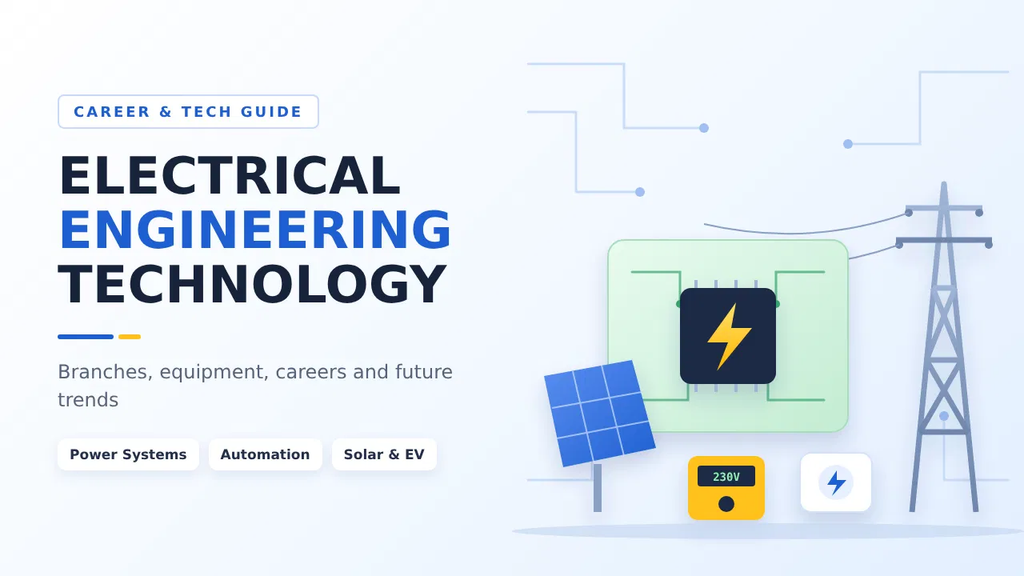
Electrical engineering technology powers almost every part of modern life. From the electricity that lights our homes to the motors that run factories, the chargers that fill electric vehicles and the control systems behind smart buildings, electrical technology keeps the world moving.
It is a practical, hands-on field that focuses on designing, installing, testing and maintaining electrical systems and equipment. As countries invest in renewable energy, smart grids, electric mobility and automation, demand for skilled electrical engineers and technologists is growing rapidly. This guide explains what electrical engineering technology covers, its main branches, key equipment, career paths, salaries and the trends shaping its future.
Table of Contents
What Is Electrical Engineering Technology
Electrical engineering technology is the application of electrical and electronic principles to solve real-world problems. While pure electrical engineering often focuses more on theory, research and advanced design, engineering technology emphasises implementation, testing, installation, troubleshooting and system operation.
Professionals in this field work with power generation, transmission, distribution, motors, control panels, electronics, instrumentation and building electrical systems. They turn designs into working installations and make sure those systems run safely and efficiently for many years.
Basic Concepts Every Learner Should Know
A few core ideas form the foundation of all electrical work.
- Voltage: the electrical pressure that pushes current through a circuit, measured in volts
- Current: the flow of electric charge, measured in amperes
- Resistance: opposition to current flow, measured in ohms
- Power: the rate of energy use, measured in watts or kilowatts
- Ohm’s Law: voltage equals current multiplied by resistance
- AC and DC: alternating current used in grids and homes, direct current used in batteries, solar panels and electronics
- Power factor: how effectively electrical power is converted into useful work
Main Branches of Electrical Engineering Technology
The field is broad, and most professionals specialise in one or two areas.
Power Systems
Power systems cover how electricity is generated in thermal, hydro, nuclear, solar and wind plants, then transmitted over high-voltage lines and distributed through substations to homes and industries. Engineers in this branch work on transformers, switchgear, protection relays and grid stability.
Electrical Machines and Drives
This branch deals with motors, generators and transformers. Variable frequency drives control motor speed to save energy in pumps, fans and conveyors. Electric vehicle motors and traction systems for railways are also part of this area.
Control and Instrumentation
Control engineers design systems that automatically manage processes using sensors, programmable logic controllers, SCADA and distributed control systems. Instrumentation measures pressure, temperature, flow and level in factories, power plants and refineries.
Electronics and Power Electronics
Electronics covers circuits, semiconductors and embedded systems. Power electronics focuses on converting and controlling electrical power using devices such as inverters, rectifiers and converters, which are essential in solar systems, EV chargers and UPS units.
Building Electrical Services
This area includes wiring, lighting design, earthing, lightning protection, backup generators, fire alarm interfaces and energy management in residential, commercial and industrial buildings.
Renewable Energy Systems
Renewable energy engineers design and install solar photovoltaic plants, wind turbines, battery energy storage and hybrid systems. This is one of the fastest-growing branches as countries move toward cleaner power.
| Branch | Main Focus | Typical Employers |
|---|---|---|
| Power Systems | Generation and grid | Utilities, Power Plants |
| Machines and Drives | Motors, transformers | Factories, Railways |
| Control and Instrumentation | Automation, PLC | Refineries, Pharma |
| Power Electronics | Inverters, chargers | EV, Solar Companies |
| Building Services | Wiring, lighting | Contractors, Real Estate |
| Renewable Energy | Solar, wind, storage | EPC, Energy Firms |
Key Equipment and Tools
Electrical professionals work with a wide range of equipment and testing tools.
- Transformers, switchgear, circuit breakers and distribution boards
- Motors, generators and variable frequency drives
- PLCs, HMIs and SCADA software
- Multimeters, clamp meters and insulation resistance testers
- Earth resistance testers and power quality analysers
- Oscilloscopes for electronic circuit testing
- Thermal imaging cameras for detecting hot spots in panels
Software tools such as AutoCAD Electrical, ETAP, MATLAB, EPLAN and PVsyst help engineers design systems, run load flow studies and plan solar plants.
Electrical Safety Practices
Electricity can cause shock, burns, fires and arc flash injuries, so safety is a core part of the profession. Workers must follow lockout tagout procedures, use insulated tools and gloves, test circuits before touching them and maintain safe distances from live parts. Proper earthing, residual current devices and correctly rated circuit breakers protect both people and equipment. Electricians and engineers should also be trained in first aid for electric shock.
Education and Qualifications
There are several routes into electrical engineering technology, depending on the career level you aim for.
ITI and Diploma Courses
ITI Electrician and Wireman trades are popular entry points for hands-on work. A Diploma in Electrical Engineering, usually three years after Class 10, prepares students for supervisor and technician roles in industries, utilities and contracting firms.
Degree Programmes
A B.Tech or B.E. in Electrical or Electrical and Electronics Engineering opens doors to design, project management and government jobs. Postgraduate degrees allow specialisation in power systems, power electronics, control systems or renewable energy.
Licences and Certifications
Electrical contractor and supervisor licences issued by state electrical inspectorates are required for installation work in India. Certifications in PLC programming, solar installation, energy auditing from the Bureau of Energy Efficiency and electrical safety improve job prospects and earnings.
Career Opportunities and Salary
Electrical professionals work in power utilities, manufacturing plants, construction, oil and gas, railways, metro projects, data centres, EV companies and renewable energy firms. Government organisations such as NTPC, Power Grid, state electricity boards and railways recruit through competitive exams like GATE and state-level tests.
Salaries depend on qualification, experience, sector and location. Entry-level technicians start with modest pay, while experienced engineers in oil and gas, data centres and international projects earn significantly more. Electrical engineers and electricians are in strong demand in the Gulf countries, Europe, Canada and Australia, where infrastructure and energy projects offer attractive packages. Many professionals also start their own electrical contracting or solar installation businesses with the help of MSME loans and equipment finance.
Energy Efficiency and Cost Savings
Electricity is one of the largest operating costs for factories, hospitals, malls and offices, so energy efficiency has become a major focus. Electrical professionals help organisations cut bills by replacing old motors with high-efficiency models, installing variable frequency drives on pumps and fans, switching to LED lighting and correcting low power factor with capacitor banks.
Energy audits identify where power is wasted and suggest practical upgrades with clear payback periods. Rooftop solar with net metering allows businesses and homeowners to generate their own electricity and lower monthly bills. Many banks now offer green loans and solar financing at attractive interest rates, making these upgrades easier to fund.
Future Trends in Electrical Technology
The field is changing quickly with new technologies and energy policies.
- Smart grids with digital meters, automation and real-time monitoring
- Large-scale battery storage to balance solar and wind power
- Rapid growth of EV charging infrastructure
- Green hydrogen production using renewable electricity
- Energy-efficient motors, LED lighting and building automation
- IoT-based predictive maintenance for transformers and switchgear
These trends mean electrical professionals who keep updating their skills will continue to find excellent opportunities.
Conclusion
Electrical engineering technology is a practical and rewarding field that keeps homes, industries and cities powered. From power systems and motors to automation, electronics and renewable energy, it offers a wide choice of specialisations. With the right education, safety awareness and continuous learning, electrical professionals can build stable, well-paid careers and play a key role in the world’s shift toward clean, smart and efficient energy.