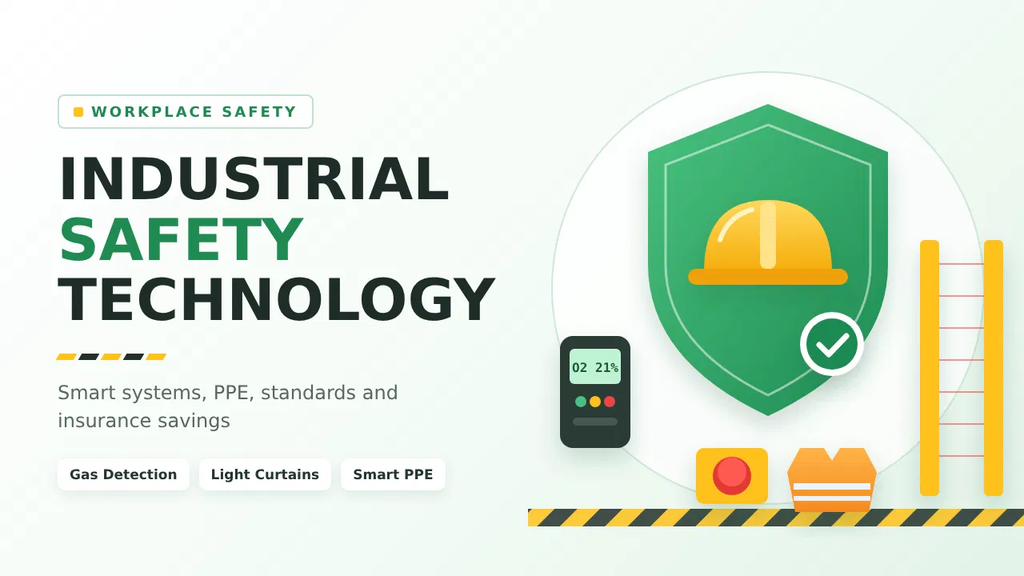
Industrial safety technology protects workers, machines and facilities from accidents, injuries and costly downtime. In factories, construction sites, warehouses, refineries and mines, the right safety systems can be the difference between a normal working day and a serious incident.
Traditional safety relied mainly on helmets, warning signs and manual checks. Today, companies use smart sensors, machine guarding, gas detectors, wearable devices, AI-powered cameras and connected safety software to prevent accidents before they happen. Investing in safety technology not only saves lives but also reduces insurance costs, legal risk and production losses. This guide explains the key technologies, standards, costs and benefits every business should understand.
Table of Contents
What Is Industrial Safety Technology
Industrial safety technology refers to equipment, systems and software designed to identify hazards, protect people and stop dangerous situations from turning into accidents. It covers everything from basic personal protective equipment to advanced automated shutdown systems in chemical plants.
The goal is to follow the hierarchy of controls: eliminate the hazard where possible, replace it with something safer, isolate people from it through engineering controls, manage it with procedures and finally protect workers with personal equipment. Technology plays a role at every level of this hierarchy.
Common Hazards in Industrial Workplaces
Understanding risks is the first step in choosing the right safety solutions.
- Moving machinery that can cause crushing, cutting or entanglement
- Falls from height on roofs, platforms, ladders and scaffolds
- Fire and explosion from flammable gases, dust and chemicals
- Toxic gas leaks and oxygen-deficient confined spaces
- Electrical shock and arc flash from live equipment
- Forklift, crane and vehicle collisions
- Noise, heat, vibration and repetitive strain injuries
Key Industrial Safety Technologies
Modern workplaces combine several technologies to create layers of protection.
Machine Guarding and Safety Interlocks
Fixed guards, interlocked doors and safety switches stop machines automatically when a guard is opened. This prevents workers from reaching moving parts during operation and is one of the most effective ways to prevent amputations and crush injuries.
Light Curtains and Safety Laser Scanners
Light curtains create an invisible barrier of infrared beams around presses, robots and conveyors. If a hand or body breaks the beam, the machine stops instantly. Safety laser scanners monitor larger areas around robots and automated vehicles and slow or stop equipment when someone enters a danger zone.
Safety PLCs and Emergency Stop Systems
Safety programmable logic controllers manage emergency stops, guard interlocks and light curtains with built-in redundancy. If any component fails, the system goes to a safe state. Emergency stop buttons and pull cords allow workers to halt equipment immediately in a crisis.
Gas Detection Systems
Fixed and portable gas detectors monitor for flammable gases, carbon monoxide, hydrogen sulphide, ammonia and low oxygen levels. Alarms warn workers to evacuate, and systems can automatically start ventilation or shut off gas supply. They are essential in refineries, chemical plants, sewage works and confined spaces.
Fire Detection and Suppression
Smoke and heat detectors, flame detectors, sprinkler systems, foam systems and gas-based suppression protect plants, warehouses and server rooms. Linear heat detection cables are widely used along conveyors and cable trays where fires can spread quickly.
Wearable Safety Devices
Smart helmets, vests and badges can detect falls, monitor heart rate and body temperature, track location and send alerts when a worker is in danger. Lone worker devices allow employees working alone to call for help with one button.
AI Video Analytics
AI-powered cameras can detect if workers are not wearing helmets or vests, entering restricted zones, or standing too close to moving forklifts. They provide real-time alerts and data on unsafe behaviour, helping managers fix problems before accidents occur.
| Technology | Main Purpose | Where Used |
|---|---|---|
| Light Curtains | Stop machines on entry | Presses, Robots |
| Gas Detectors | Warn of toxic gases | Refineries, Tanks |
| Safety PLC | Reliable shutdown | Automated Lines |
| Smart Wearables | Worker monitoring | Mines, Construction |
| AI Cameras | Detect unsafe acts | Warehouses, Plants |
| Fire Suppression | Control fires early | Stores, Server Rooms |
Personal Protective Equipment Gets Smarter
Personal protective equipment remains the last line of defence. Hard hats, safety shoes, gloves, goggles, ear protection, respirators and high-visibility clothing are basic requirements in most industries. Fall protection harnesses with self-retracting lifelines protect people working at height.
New PPE designs focus on comfort, since workers are more likely to wear equipment that fits well. Cooling vests, lighter helmets, cut-resistant gloves with better grip and powered air-purifying respirators improve both safety and productivity. Some PPE now includes sensors that confirm it is being worn correctly.
Lockout Tagout and Permit Systems
Many serious accidents happen during maintenance, when machines start unexpectedly. Lockout tagout procedures isolate energy sources such as electricity, hydraulics, pneumatics and steam before work begins. Each worker applies a personal lock so the machine cannot be restarted until everyone is clear.
Digital permit-to-work systems now replace paper forms for hot work, confined space entry and working at height. They ensure the right checks, approvals and gas tests are completed and recorded before work starts.
Safety Standards and Regulations
Safety technology must meet recognised standards. International standards include ISO 45001 for occupational health and safety management, ISO 13849 and IEC 62061 for machine safety control systems, and IEC 61511 for process safety in chemical plants. In the United States, OSHA sets workplace safety rules.
In India, the Occupational Safety, Health and Working Conditions Code, the Factories Act provisions, state factory rules and guidelines from the Directorate General Factory Advice Service and Labour Institutes govern workplace safety. Regular audits, safety committees and mock drills are required in many industries.
Cost, Insurance and Return on Investment
Safety technology requires investment, but the cost of accidents is often much higher. A single serious injury can lead to medical expenses, compensation claims, legal action, production stoppage, equipment damage and loss of reputation.
Strong safety systems help businesses secure better terms on workmen’s compensation insurance, public liability insurance, fire insurance and industrial all-risk policies. Insurers often reward companies with lower premiums when they show good safety records, certified management systems and modern protection equipment. Many firms fund major safety upgrades through equipment finance or include them in plant modernisation loans.
Building a Strong Safety Culture
Technology works best when people understand and support it. Regular training, toolbox talks, near-miss reporting and leadership involvement build a culture where safety comes first. Digital safety apps allow workers to report hazards with photos from their phones, and dashboards help managers track incidents, inspections and corrective actions in real time.
- Train every worker on hazards and emergency procedures
- Encourage reporting of near misses without blame
- Inspect and maintain safety devices on a fixed schedule
- Review incidents to find root causes and prevent repeats
- Recognise teams that maintain strong safety performance
Careers in Industrial Safety
Growing focus on workplace safety has created strong demand for safety officers, HSE managers, fire safety engineers, process safety specialists and safety auditors. Qualifications such as diplomas in industrial safety, NEBOSH certifications and degrees in fire and safety engineering lead to good opportunities in India and especially in the Gulf, where large oil, gas and construction projects require qualified HSE professionals.
Conclusion
Industrial safety technology has moved far beyond basic helmets and signs. Machine guarding, light curtains, gas detection, smart wearables, AI cameras and digital permit systems now work together to protect people and assets. By combining the right technology with proper standards, training and a positive safety culture, businesses can prevent accidents, control insurance costs and create workplaces where every employee returns home safely.