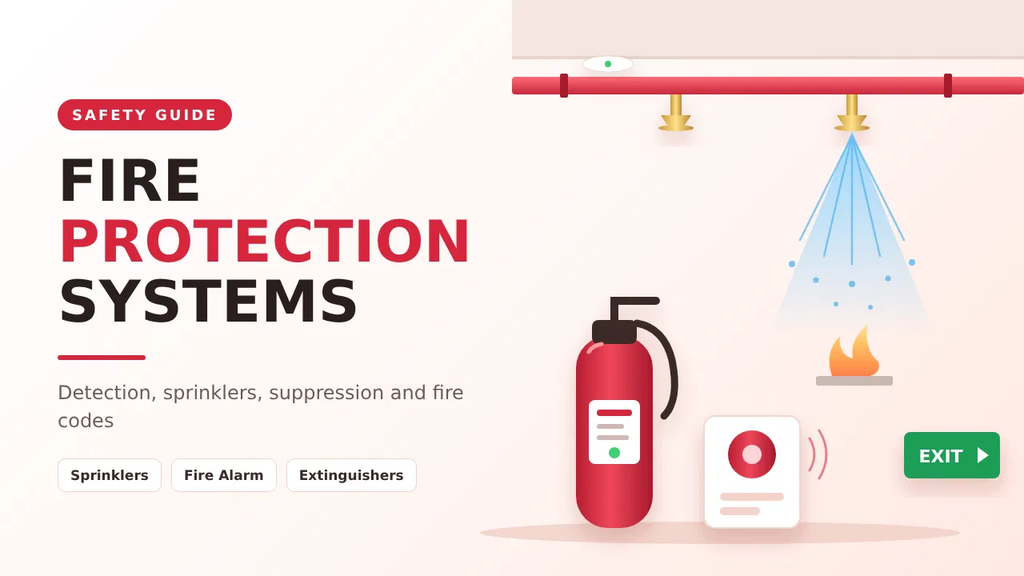
Fire protection systems are designed to detect, control and put out fires before they cause serious harm to people and property. Every modern building, from homes and offices to hospitals, malls, factories and warehouses, depends on these systems to keep occupants safe and limit damage.
A good fire protection plan does not rely on one device. It combines early detection, alarms, automatic suppression, fire-resistant construction and clear escape routes. Choosing and maintaining the right systems also helps owners meet fire safety laws, pass inspections and get better terms on fire insurance. This guide explains the main types of fire protection systems, how they work, where they are used and what they cost to install and maintain.
Table of Contents
What Are Fire Protection Systems
Fire protection systems are the equipment and building features that reduce the risk and impact of fire. They are generally divided into two groups: active fire protection and passive fire protection.
Active systems need some action to work, either automatic or manual, such as detectors sounding an alarm or sprinklers releasing water. Passive systems are built into the structure itself, such as fire-rated walls, doors and coatings that slow the spread of fire and smoke. Both work together to protect lives and give people time to escape safely.
How Fire Starts and Spreads
Fire needs three elements to burn: heat, fuel and oxygen, often called the fire triangle. A fourth element, the chemical chain reaction, keeps the fire going. Fire protection systems work by removing one or more of these elements, for example cooling with water, cutting off oxygen with foam or gas, or interrupting the chemical reaction with special agents.
Fires are classified by the type of fuel involved. Class A covers ordinary materials like wood, paper and cloth. Class B involves flammable liquids such as petrol and oil. Class C covers flammable gases, electrical fires are often treated separately, Class D involves combustible metals and Class F or K covers cooking oils and fats. Knowing the fire class is important when choosing the right suppression method.
Fire Detection and Alarm Systems
Early detection is the most important step, because a fire found in its first few minutes is much easier to control.
Smoke Detectors
Optical or photoelectric smoke detectors sense smoke particles and are the most common type in homes, offices and hotels. Ionisation detectors respond quickly to fast-flaming fires. Aspirating smoke detection systems draw air through pipes for very early warning in data centres and clean rooms.
Heat and Flame Detectors
Heat detectors trigger at a fixed temperature or when temperature rises quickly. They are used in kitchens, garages and dusty areas where smoke detectors may give false alarms. Flame detectors use infrared or ultraviolet sensors to spot flames in fuel storage areas, refineries and aircraft hangars.
Fire Alarm Control Panels
The control panel is the brain of the alarm system. Conventional panels show the zone where a fire is detected, while addressable panels identify the exact device, helping responders reach the fire faster. Modern panels can trigger sirens, flash strobes, release door holders, shut down air handling units and alert the fire department automatically.
Fire Suppression Systems
Once a fire is detected, suppression systems act to control or extinguish it.
Automatic Sprinkler Systems
Sprinklers are the most widely used fire suppression method in the world. Each sprinkler head has a heat-sensitive glass bulb that breaks at a set temperature, releasing water directly over the fire. Only the heads near the fire activate, which limits water damage. Wet pipe, dry pipe, pre-action and deluge systems are chosen based on building type and climate.
Fire Hydrant and Hose Reel Systems
Hydrant systems supply large volumes of water through a network of pipes, pumps and outlets for firefighters. Hose reels allow trained occupants to tackle small fires quickly. These systems are mandatory in high-rise buildings, factories and large commercial complexes in most countries.
Gas-Based Suppression
Clean agent systems such as FM-200, Novec 1230 and inert gas mixtures put out fires without water, leaving no residue. They protect server rooms, control rooms, archives, museums and electrical panels where water would cause damage. CO2 systems are used in unoccupied areas such as turbine enclosures and engine rooms.
Foam and Kitchen Systems
Foam systems smother flammable liquid fires in fuel depots, refineries, airports and chemical plants. Wet chemical systems are installed above commercial kitchen hoods to put out cooking oil fires and cool the surface to prevent re-ignition.
| System | Works By | Best For |
|---|---|---|
| Sprinklers | Cooling with water | Offices, Malls, Hotels |
| Hydrants | High-volume water | Factories, High-rises |
| Clean Agent Gas | No-residue suppression | Server Rooms, Archives |
| Foam | Smothering liquids | Fuel Depots, Airports |
| Wet Chemical | Oil fire control | Commercial Kitchens |
Fire Extinguishers
Portable extinguishers are the first line of defence for small fires. Water extinguishers suit Class A fires, foam works on A and B, dry chemical powder (ABC) covers most common fires, CO2 is ideal for electrical equipment and wet chemical extinguishers handle kitchen fires. Extinguishers must be placed at visible, easy-to-reach points and checked regularly for pressure and damage.
Passive Fire Protection
Passive protection keeps fire and smoke contained within one area, giving people more time to escape and limiting damage.
- Fire-rated walls, floors and ceilings that resist fire for a set time
- Fire doors with self-closing devices and smoke seals
- Fire stopping around pipes and cables that pass through walls
- Intumescent coatings that expand to protect structural steel
- Fire dampers in ducts to stop smoke spreading through ventilation
- Protected staircases and clearly marked emergency exits
Emergency Lighting and Evacuation
When a fire breaks out, power may fail and smoke can reduce visibility. Emergency lights and illuminated exit signs guide people to safety. Public address and voice evacuation systems give clear instructions, while smoke control and pressurisation systems keep stairwells clear. Regular fire drills ensure everyone knows the escape routes and assembly points.
Codes, Standards and Approvals
Fire protection must follow national and international codes. Widely used standards include NFPA codes from the United States, British Standards and EN standards in Europe. In India, the National Building Code Part 4 sets fire and life safety requirements, and state fire services issue fire NOCs for buildings such as hospitals, schools, malls, hotels, factories and high-rise residential towers. Systems should be designed by qualified engineers and installed by licensed contractors.
Installation Cost and Maintenance
The cost of fire protection depends on building size, occupancy type, risk level and the systems required. Small offices may need only detectors, extinguishers and emergency lights, while factories and high-rise buildings require full sprinkler networks, hydrants, pump rooms and water storage tanks.
Maintenance is just as important as installation. Detectors need periodic testing, sprinkler systems need flow tests, pumps need weekly runs and extinguishers need annual servicing and refilling. Many owners sign annual maintenance contracts with certified fire safety companies to keep systems in working order and records ready for inspections.
Fire Protection and Insurance
Insurers look closely at fire protection when pricing property and business policies. Buildings with sprinklers, approved alarm systems and a valid fire NOC often qualify for lower premiums on fire insurance, standard fire and special perils policies and business interruption cover. A well-maintained system also helps claims get settled faster, while missing or faulty equipment can lead to disputes or reduced payouts. Homeowners should also consider home insurance that covers fire damage to the structure and contents.
Conclusion
Fire protection systems save lives, protect property and keep businesses running. By combining early detection, reliable alarms, the right suppression method, strong passive protection and clear evacuation plans, building owners can greatly reduce fire risk. Following codes, keeping systems well maintained and reviewing insurance cover regularly ensures that when a fire does happen, people are safe and losses are kept to a minimum.