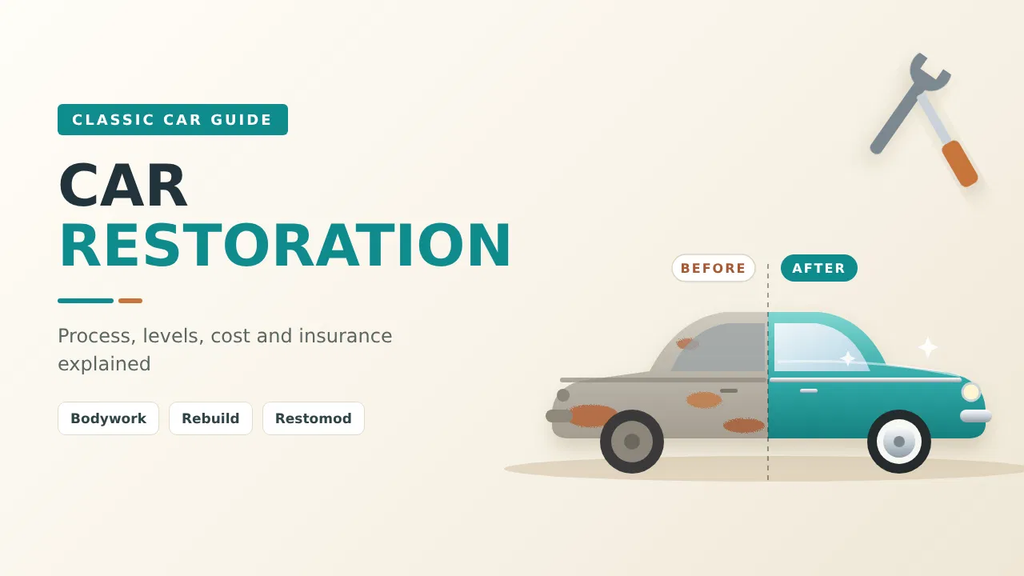
Car restoration is the process of bringing an old, worn or damaged vehicle back to its original condition, or even better. For many enthusiasts, it is a passion that combines engineering, craftsmanship and history in one rewarding project.
Restoring a classic or vintage car is not just about making it look good. It involves rebuilding mechanical parts, repairing rust, refinishing paint, restoring interiors and making sure the car is safe and reliable on the road. Done well, restoration can preserve a piece of automotive heritage and also increase the value of the vehicle significantly. Whether you are planning your first project or thinking about hiring a professional workshop, understanding the process, costs and key decisions will help you avoid expensive mistakes.
Table of Contents
What Is Car Restoration
Car restoration means repairing and refurbishing a vehicle so that it closely matches how it looked and performed when it left the factory. It usually applies to classic, vintage and collectible cars, but owners also restore older everyday cars for sentimental reasons.
A full restoration can take months or even years, depending on the car’s condition, the availability of parts and the level of detail required. Some owners aim for perfect originality, while others prefer a car that looks original but uses modern parts for better safety and comfort.
Levels of Car Restoration
Not every project needs the same depth of work. Restorers generally describe projects in a few clear levels.
Driver Quality Restoration
This level focuses on making the car reliable and presentable for regular use. Mechanical systems are repaired, obvious rust is fixed and the paint and interior are cleaned up, but small imperfections are accepted. It is the most affordable option.
Show Quality Restoration
Show quality cars look excellent at car shows and events. Bodywork, paint and interior are finished to a high standard, and most parts are restored or replaced. The car can still be driven, but owners usually use it occasionally.
Concours Restoration
Concours restoration is the highest level, aimed at judged competitions. Every bolt, finish, label and colour must match factory specifications exactly. This requires deep research, original or correct reproduction parts and expert craftsmen, making it the most expensive and time-consuming option.
Restomod
A restomod keeps the classic look but upgrades the car with modern engines, brakes, suspension, air conditioning and electronics. It offers vintage style with modern performance and comfort, and has become very popular among younger buyers.
| Level | Main Goal | Cost Range |
|---|---|---|
| Driver Quality | Reliable daily use | Low to medium |
| Show Quality | Excellent appearance | Medium to high |
| Concours | Exact factory originality | Very high |
| Restomod | Classic look, modern parts | Medium to very high |
Step-by-Step Car Restoration Process
Every project is different, but most professional restorations follow a clear sequence.
Step 1: Assessment and Planning
The car is inspected in detail to check rust, frame damage, engine condition, missing parts and paperwork. A realistic plan and budget are prepared, along with the target restoration level. Photographs are taken from every angle to help with reassembly later.
Step 2: Disassembly
The car is carefully stripped down. Every part is labelled, bagged and stored in an organised way. Trim, glass, interior, engine, suspension and wiring are removed so the body can be worked on fully.
Step 3: Body and Rust Repair
The body is stripped to bare metal using media blasting or chemical dipping. Rusted sections are cut out and replaced with new metal, and dents are repaired. Panel gaps are adjusted so doors, bonnet and boot fit correctly. This stage often takes the most time.
Step 4: Mechanical Rebuild
The engine, gearbox, differential, brakes, suspension and steering are rebuilt or replaced. Worn bearings, seals, gaskets and bushes are renewed. Many owners also upgrade brakes and cooling systems for better safety.
Step 5: Paint and Finishing
The body receives primer, filler, base coat and clear coat, followed by careful sanding and polishing. Matching the original factory colour is important for value. Chrome parts are re-plated and badges are restored.
Step 6: Interior and Electrical Work
Seats, carpets, headliner and door panels are reupholstered using correct materials. A new wiring harness is often installed, as old wiring is a common cause of faults and fire risk. Gauges, lights and switches are tested and restored.
Step 7: Reassembly and Road Testing
All restored parts are reinstalled, and the car is aligned and adjusted. Road testing helps find leaks, noises and handling issues that need fine-tuning before the car is complete.
Cost of Car Restoration
Restoration costs vary widely depending on the car model, its condition, the level of restoration and labour rates in your area. Rare parts for exotic brands can be very expensive, while popular classics usually have good reproduction parts available.
- Bodywork and rust repair often take the largest share of the budget
- Quality paint jobs are labour-intensive and costly
- Engine and gearbox rebuilds depend on parts availability
- Upholstery, chrome plating and wiring add significant costs
- Unexpected hidden damage can increase the final bill
Experts often advise buying a car in the best condition you can afford, as fixing a badly rusted car can cost more than paying extra for a solid one at the start.
Financing and Insurance for Restored Cars
Because restoration projects can be costly, some owners use personal loans or specialised classic car financing to spread the expense. Comparing interest rates, tenure and processing fees from banks and NBFCs helps keep the overall cost manageable.
Insurance is equally important. Standard motor insurance may not reflect the true value of a restored classic. Classic or vintage car insurance policies often offer agreed value cover, which pays a pre-agreed amount in case of total loss, along with cover for spare parts and limited mileage use. Keeping receipts, photos and a professional valuation report helps when arranging cover and during claims.
Choosing a Restoration Workshop
If you are not restoring the car yourself, choosing the right workshop is critical. Look for a shop with experience in your specific make and model, visit their facility and check finished projects. Ask for a written estimate, a clear payment schedule and regular progress updates with photographs. Reputable restorers are transparent about hidden problems and give realistic timelines.
Legal and Registration Considerations
Before starting, make sure the car’s ownership documents and chassis and engine numbers are in order. In India, vintage vehicles over 50 years old that meet originality rules can be registered under a special vintage category with distinct number plates. Changing the engine or making major modifications may require approval from the transport authority, so check the rules before planning a restomod.
Value and Investment Potential
A well-restored classic car can increase in value, especially for rare models with strong demand. However, not every restoration is a profitable investment, as costs can exceed the market value of the finished car. Popular collectible models, documented history and high-quality work tend to hold value best. Many owners restore for passion first and treat any value gain as a bonus.
Common Mistakes to Avoid
- Starting without a clear budget and restoration level
- Skipping proper rust treatment before paint
- Losing track of parts during disassembly
- Using wrong or poor-quality reproduction parts on a concours project
- Ignoring wiring and brakes while focusing only on looks
- Not insuring the car during and after restoration
Conclusion
Car restoration is a rewarding journey that brings old vehicles back to life while preserving automotive history. By choosing the right restoration level, planning a realistic budget, working with skilled professionals and protecting the finished car with proper insurance, owners can enjoy a classic that looks great, drives well and holds its value for years to come.