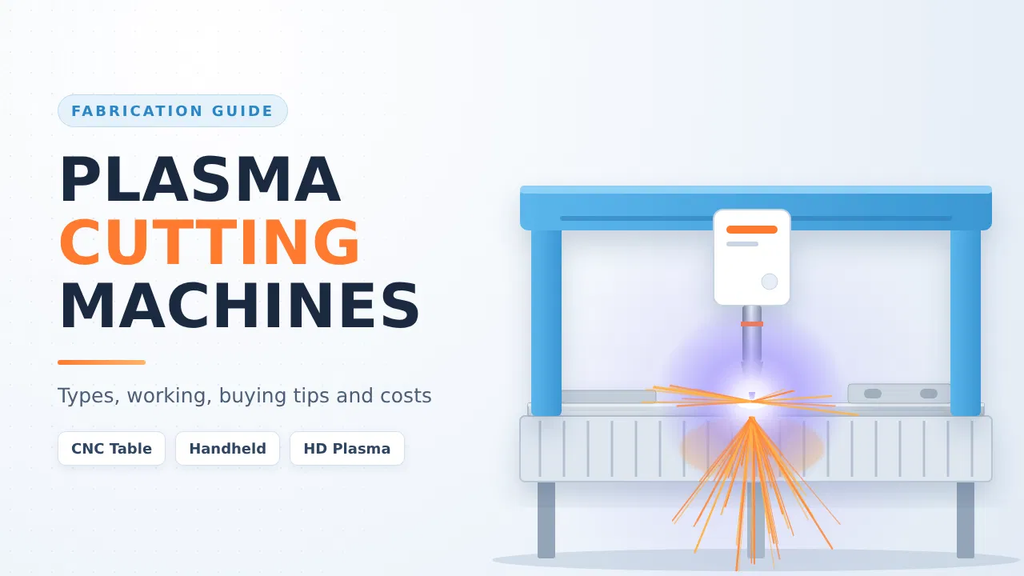
Plasma cutting machines have become one of the most practical tools for cutting metal quickly and accurately. From small fabrication workshops to large shipyards and steel structure plants, these machines cut through electrically conductive metals with speed that older methods simply cannot match.
A plasma cutter is also one of the best investments for a metalworking business because it balances cost, speed and cutting thickness very well. Whether you are a fabricator planning to buy your first machine or a production manager comparing options for a factory, understanding how plasma cutting machines work, their types, costs and limitations will help you make a smarter decision.
Table of Contents
What Is a Plasma Cutting Machine
A plasma cutting machine is a thermal cutting system that uses a jet of ionised gas, called plasma, to melt and blow away metal. The plasma arc reaches temperatures of up to 20,000 degrees Celsius or more, which is hot enough to cut steel, stainless steel, aluminium, copper and brass.
The process only works on materials that conduct electricity, because the workpiece forms part of the electrical circuit. This makes plasma ideal for metal fabrication but unsuitable for wood, plastic, glass or stone.
How Plasma Cutting Works
The working principle is simple once you break it into steps. A gas such as compressed air, nitrogen, oxygen or argon-hydrogen mix is forced through a narrow nozzle inside the torch. At the same time, an electric arc is created between an electrode in the torch and the metal workpiece.
The arc heats the gas until it turns into plasma, the fourth state of matter. The constricted nozzle focuses this plasma into a fine, high-velocity jet. The jet melts the metal along the cutting line, and the force of the gas blows the molten metal out of the kerf, leaving a clean cut.
Modern machines use a pilot arc to start cutting without touching the metal, which reduces wear on consumables and allows cutting through painted or rusted surfaces.
Main Types of Plasma Cutting Machines
Plasma cutters come in several forms, each suited to a different type of work and budget.
Handheld Plasma Cutters
These are portable units with a manual torch, commonly used for repair work, maintenance, automotive body shops and site fabrication. They are affordable and easy to carry, and smaller models can run on single-phase power. Cut quality depends largely on the skill and steady hand of the operator.
CNC Plasma Cutting Tables
CNC plasma tables combine a plasma power source with a computer-controlled gantry that moves the torch along a programmed path. They cut complex shapes, brackets, flanges and parts from full steel sheets with repeatable accuracy. This is the most popular choice for fabrication shops that produce parts in volume.
High-Definition Plasma Systems
High-definition plasma uses a tighter, more stable arc and advanced gas control to produce edges that come close to laser quality on medium-thickness plates. These systems are used where better hole quality and squarer edges are needed without the higher cost of a large laser.
Robotic and Bevel Plasma Systems
Robotic plasma cutting mounts the torch on an industrial robot arm to cut pipes, beams, pressed parts and 3D shapes. Bevel heads tilt the torch to create angled edges that are ready for welding, saving a separate grinding or machining step in heavy fabrication.
Key Components of a Plasma Cutter
Knowing the main parts helps buyers understand specifications and maintenance needs.
- Power source, which converts input power into a steady DC output and decides cutting capacity
- Torch, which holds the electrode, nozzle, swirl ring and shield cap
- Consumables, the parts that wear out with use and must be replaced regularly
- Gas supply, either an air compressor or cylinders with regulators
- Ground clamp and cables that complete the electrical circuit
- CNC controller and torch height control on automated tables
- Water or downdraft table to capture smoke, fumes and sparks
Plasma Compared With Other Cutting Methods
Buyers often compare plasma with laser and oxy-fuel cutting before deciding. Each method has a clear place in the workshop.
| Factor | Plasma | Fibre Laser / Oxy-Fuel |
|---|---|---|
| Machine Cost | Low to medium | Laser high, Oxy-fuel low |
| Best Thickness | Medium plates | Laser thin, Oxy-fuel very thick |
| Cutting Speed | Fast | Laser fastest on thin sheet |
| Edge Quality | Good, slight bevel | Laser excellent |
| Metals Cut | All conductive metals | Oxy-fuel mild steel only |
In short, plasma is the most cost-effective option for shops that mainly cut mild steel and stainless steel plates in the medium thickness range, while laser suits thin sheet work and oxy-fuel remains useful for very thick carbon steel.
How to Choose the Right Plasma Cutting Machine
Picking the right machine depends on the type of work, the thickness of metal and the expected production volume. Here are the main points to check before buying.
- Amperage and cut capacity: check both the recommended cut and the maximum severance thickness, not just the headline number
- Duty cycle: a higher duty cycle means the machine can cut longer without overheating
- Input power: single-phase for small workshops, three-phase for industrial units
- Gas type: air plasma is cheaper and simpler, while multi-gas systems give better quality on stainless steel and aluminium
- Table size: match it with the standard sheet sizes you buy
- Software and nesting: good nesting software saves material and lowers cost per part
- After-sales service: local support and easy availability of consumables matter a lot
Well-known manufacturers include Hypertherm, Lincoln Electric, ESAB, Miller, Kjellberg and Thermal Dynamics, along with several reliable Indian and Chinese table builders who pair their gantries with these power sources.
Cost of Ownership and Financing
The price of a plasma cutting machine varies widely. A basic handheld unit is quite affordable, while a full CNC plasma table with a high-definition power source is a major capital investment. Buyers should look beyond the purchase price and calculate the total cost of ownership.
Running costs include electricity, compressed air or gas, consumables, maintenance and operator wages. Consumables are the biggest recurring expense, so a system with longer consumable life can save a large amount over a year.
Many fabrication businesses buy CNC plasma tables through machinery loans and equipment finance from banks and NBFCs. Small units in India can also explore MSME credit schemes. Since these machines are valuable assets, taking machinery breakdown insurance and fire insurance is a sensible way to protect the business against sudden losses.
Industrial Applications
Plasma cutting machines are used across a wide range of industries because of their speed and flexibility.
- Structural steel fabrication for buildings, sheds and bridges
- Shipbuilding and offshore platform construction
- Agricultural machinery and trailer manufacturing
- HVAC ducting and sheet metal work
- Automotive repair and custom vehicle fabrication
- Scrap processing and demolition
- Signage, metal art and decorative panels
Safety and Maintenance Tips
Plasma cutting produces intense light, heat, sparks, noise and fumes. Operators should always wear a shaded face shield or goggles, flame-resistant clothing, leather gloves and hearing protection. Proper fume extraction or a water table is essential, especially when cutting galvanised or coated steel.
For long machine life, keep the compressed air clean and dry using filters and dryers, because moisture and oil quickly damage consumables. Replace the electrode and nozzle together when cut quality drops, check cables and connections regularly, and keep the CNC rails clean and lubricated. Workplace accident cover and health insurance for operators add another layer of protection in a busy workshop.
Conclusion
Plasma cutting machines offer an excellent balance of speed, cutting capacity and affordability, which is why they remain a core tool in metal fabrication. From handheld units for repair jobs to CNC and high-definition tables for production, there is a plasma solution for almost every workshop. By choosing the right amperage, power source and table size, and by following good maintenance and safety practices, businesses can cut costs, improve output and get reliable performance for many years.