Steel is the most widely used engineering material in the world. Buildings, bridges, railways, cars, ships, home appliances and machines all depend on it, which makes the steel manufacturing process one of the most important industrial activities of any economy.
Making steel is a long journey that starts with iron ore, coal and limestone and ends with finished products such as plates, coils, bars and beams. Modern steel plants combine giant furnaces, precise chemistry control and automated rolling mills to produce thousands of tonnes every day. Understanding how steel is made helps students, engineers, investors and business owners see why quality, cost and sustainability vary so much from one plant to another.
Table of Contents
What Is Steel
Steel is an alloy made mainly of iron with a small amount of carbon, usually less than 2 percent. The carbon content and the addition of elements such as manganese, chromium, nickel, molybdenum and vanadium decide its strength, hardness, toughness and corrosion resistance.
Low carbon or mild steel is soft and easy to weld, making it ideal for construction and sheet metal. Medium and high carbon steels are harder and used for machine parts and tools. Stainless steel contains chromium and resists rust, while alloy steels are designed for special needs such as high temperature or heavy wear.
Raw Materials Used in Steel Making
The quality and cost of steel depend heavily on the raw materials that go into the furnace.
- Iron ore, mainly hematite and magnetite, the primary source of iron
- Coking coal, converted into coke to supply heat and act as a reducing agent
- Limestone and dolomite, used as flux to remove impurities as slag
- Steel scrap, recycled from old products and production waste
- Direct reduced iron or sponge iron, often used in electric furnaces
- Ferroalloys such as ferro-manganese and ferro-chrome for alloying
Before use, fine iron ore is usually converted into sinter or pellets so that gases can pass easily through the furnace, improving efficiency.
Stage One: Ironmaking
The first major step is turning iron ore into liquid iron. Two main routes are used in modern industry.
Blast Furnace Route
A blast furnace is a tall vertical shaft charged from the top with iron ore, coke and limestone. Hot air is blown in from the bottom. The coke burns to produce carbon monoxide, which removes oxygen from the iron ore. The molten iron, called hot metal or pig iron, collects at the bottom, while impurities combine with limestone to form slag that floats on top.
Direct Reduction Route
In direct reduction, iron ore is reduced in solid form using natural gas or coal, without melting. The product, known as direct reduced iron or sponge iron, is then melted in electric furnaces. India is one of the largest producers of sponge iron because of its coal-based DRI plants.
Stage Two: Primary Steelmaking
Hot metal from a blast furnace contains too much carbon and other impurities to be useful. Primary steelmaking reduces carbon and removes unwanted elements.
Basic Oxygen Furnace (BOF)
In the BOF process, molten hot metal and some scrap are poured into a converter. Pure oxygen is blown through a water-cooled lance at very high speed. The oxygen burns off excess carbon and removes silicon, manganese and phosphorus as slag. A full batch can be converted into steel in well under an hour, making BOF the main route for large integrated steel plants.
Electric Arc Furnace (EAF)
An electric arc furnace melts steel scrap, sponge iron or a mix of both using powerful electric arcs from graphite electrodes. EAF plants are smaller, more flexible and need less capital than integrated plants. Because they rely heavily on recycled scrap, they also have a lower carbon footprint.
Induction Furnace
Induction furnaces use electromagnetic induction to melt scrap and sponge iron. They are common among small and medium steel producers in India, especially for making long products such as TMT bars.
| Route | Main Input | Key Feature |
|---|---|---|
| Blast Furnace + BOF | Iron ore, coke | Very high volume |
| Electric Arc Furnace | Scrap, sponge iron | Flexible, lower emissions |
| Induction Furnace | Scrap, sponge iron | Low cost, small scale |
| DRI + EAF | Ore with gas or coal | Suits hydrogen future |
Stage Three: Secondary Steelmaking
Secondary steelmaking, also called ladle metallurgy, fine-tunes the chemistry and cleanliness of the steel. In a ladle furnace, alloying elements are added to reach the exact grade required. Argon gas stirring helps mix the steel evenly and float out impurities.
Vacuum degassing removes hydrogen, nitrogen and excess carbon, which is essential for high-quality grades used in automotive sheets, bearings and pipelines. Desulphurisation and inclusion control improve toughness and surface finish of the final product.
Stage Four: Casting
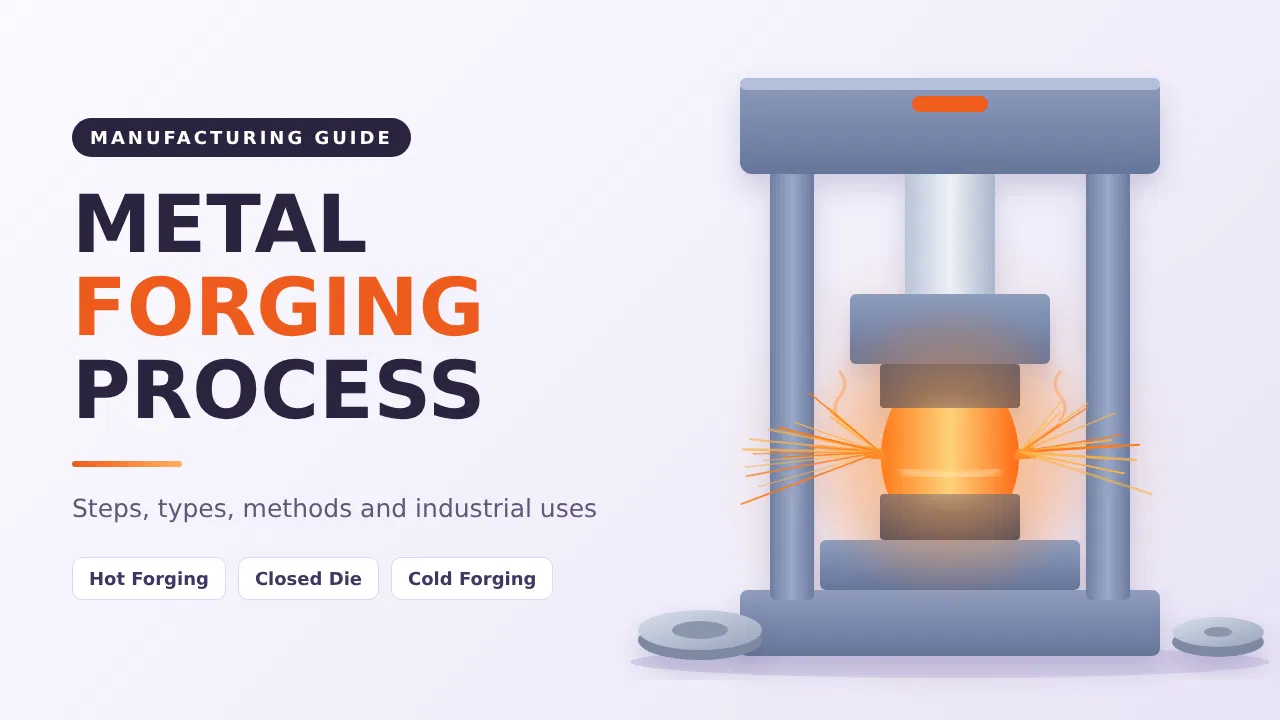
Once the liquid steel has the correct composition, it must be solidified into a shape that can be rolled. Today, most steel is produced by continuous casting. Molten steel flows from the ladle into a tundish and then into a water-cooled copper mould. A solid outer shell forms, and the strand is continuously pulled out, cooled with water sprays and cut into slabs, blooms or billets.
Continuous casting improves yield, saves energy and gives more uniform quality than older ingot casting, which is now used only for special heavy forgings and some alloy grades.
Stage Five: Rolling and Forming
Cast semi-finished products are reheated and passed through rolling mills that reduce thickness and create the final shape.
- Hot rolling turns slabs into plates and hot-rolled coils
- Cold rolling reduces thickness further for smooth, precise sheets
- Bar and rod mills produce TMT rebars and wire rods from billets
- Section mills make beams, channels, angles and rails from blooms
- Coating lines add zinc or colour coatings for galvanised and pre-painted sheets
Heat treatment, pickling, annealing and finishing lines then give the steel its final properties and surface quality before dispatch.
Quality Control and Testing
Every batch of steel is tested to make sure it meets national and international standards such as BIS, ASTM and EN. Spectrometers check chemical composition within seconds. Mechanical tests measure tensile strength, yield strength, elongation and hardness. Ultrasonic testing detects internal defects in plates and bars, and surface inspection systems scan coils at high speed for scratches and cracks.
Major Steel Producers and Market
China is the largest steel producer in the world, followed by India, Japan, the United States and Russia. In India, leading companies include Tata Steel, JSW Steel, SAIL, ArcelorMittal Nippon Steel India and Jindal Steel and Power. Global giants include ArcelorMittal, POSCO, Nippon Steel and Baowu Steel. Growing infrastructure, housing and automotive demand continue to support steel capacity expansion.
Green Steel and the Future
Traditional steelmaking is energy-intensive and a major source of carbon emissions. The industry is now moving toward cleaner methods such as hydrogen-based direct reduction, higher scrap use in electric furnaces, carbon capture and renewable power. Green steel is expected to command premium prices as automakers and builders seek low-carbon materials.
For investors and businesses, steel remains a core sector linked to economic growth. Steel stocks, commodity price trends and government infrastructure spending are closely watched indicators, while plants rely on large project finance, term loans and industrial insurance to manage risk.
Conclusion
The steel manufacturing process moves through clear stages, from ironmaking and steelmaking to refining, casting and rolling. Each stage shapes the strength, quality and cost of the final product. With rising demand and a strong push toward green production, steel will remain the backbone of construction and manufacturing, offering steady opportunities for engineers, workers and businesses connected to this vital industry.