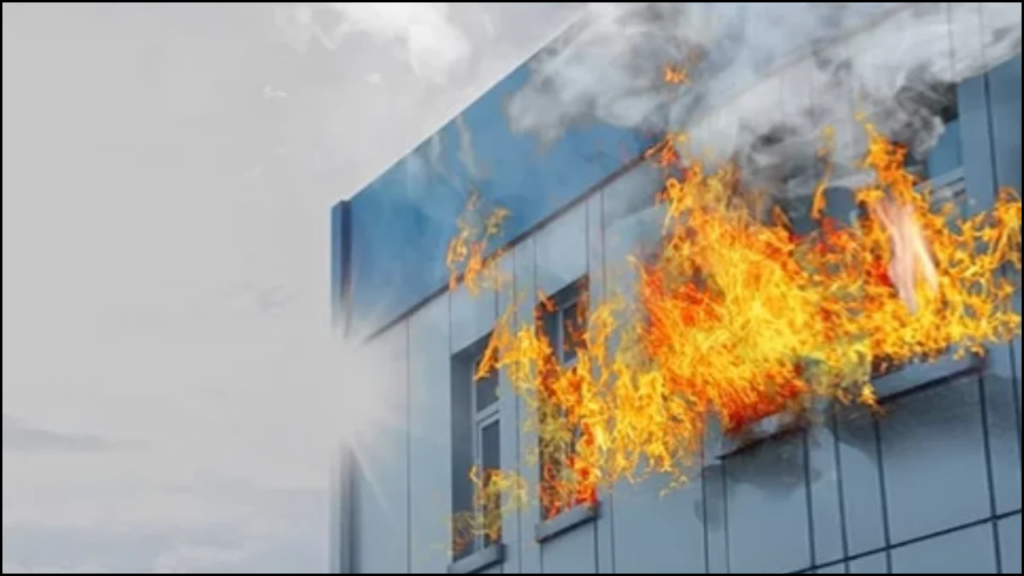
In industrial, commercial, and even residential settings, sparks from welding, grinding, or other high-heat activities can pose serious fire hazards. Engineers must account for the natural upward movement of sparks when designing spaces to ensure safety. By understanding how heat, air movement, and particle behavior interact, engineers create environments that minimize fire risk and protect people, property, and equipment.
Designing for fire safety is not just about sprinklers or alarms—it involves anticipating how sparks behave. Sparks rise because hot air is lighter than surrounding air, forming convection currents that carry particles upward. Engineers incorporate this knowledge into building layouts, material selection, ventilation design, and protective systems.
Table of Contents
Overview Of Fire-Safe Design Principles
| Design Element | Application |
|---|---|
| Material Selection | Use fire-resistant walls, ceilings, and surfaces |
| Spark Barriers | Shields and curtains prevent spark spread |
| Ventilation Systems | Airflow directs sparks safely and reduces accumulation |
| Spatial Layout | Keep flammable materials away from spark zones |
| Overhead Safety | Protect ceilings, ducts, and storage from rising sparks |
| Emergency Systems | Sprinklers and extinguishers complement preventive measures |
Material Selection
Engineers prioritize non-combustible or fire-resistant materials for areas where sparks are likely. Concrete, steel, and fire-rated panels reduce the risk of sparks igniting structural elements.
Flammable finishes, plastics, or untreated wood are avoided near welding stations, grinding zones, or high-heat equipment. Material selection ensures that even if sparks rise unexpectedly, they are less likely to cause a fire.
Spark Barriers
Physical barriers, such as welding curtains, metal shields, or glass partitions, are used to control the trajectory of sparks. These barriers contain sparks, preventing them from reaching unsafe zones.
Engineers design these barriers based on predicted spark trajectories, height of rising sparks, and airflow patterns, ensuring effective coverage without hindering workflow or visibility.
Ventilation Systems
Properly designed ventilation is crucial for managing rising sparks. Ventilation can guide hot air and sparks away from flammable materials, reduce heat accumulation, and prevent turbulence that may cause sparks to spread unpredictably.
Exhaust hoods, duct placement, and airflow control are tailored to match the heat source’s intensity and location, reducing the likelihood of spark-driven fires.
Spatial Layout
Engineers plan workspaces with safe distances between spark-producing equipment and combustible materials. Storage of flammable liquids, paper, and textiles is carefully positioned outside of upward spark paths.
Clear demarcation of work zones, safe walkways, and buffer spaces allows sparks to rise and disperse safely without contacting vulnerable materials.
Overhead Safety
Rising sparks can reach ceilings, ventilation ducts, or overhead storage areas. Fire-safe design includes fire-resistant ceiling materials, spark guards, and protected overhead storage.
Sprinkler systems are often placed strategically in these areas to respond to any sparks that do reach elevated surfaces. Engineers consider the height and intensity of sparks when designing these overhead protections.
Emergency Systems
While preventive measures are the first line of defense, emergency systems like sprinklers, extinguishers, and fire alarms provide critical backup.
Designers ensure that these systems are effective in areas where sparks are most likely to travel, including vertical paths. Proper placement and accessibility of fire-fighting equipment complement the preventive design.
Predictive Modeling
Modern engineers use computational models to predict spark trajectories and airflow patterns. By simulating how hot particles behave in different conditions, designers can optimize layout, ventilation, and barrier placement for maximum safety.
These predictive tools allow for proactive safety planning, reducing trial-and-error risks in real-world environments.
Training And Maintenance
Even the best-designed space requires awareness and upkeep. Workers are trained to respect spark paths, keep flammable materials away, and use PPE. Regular maintenance ensures that spark barriers, ventilation systems, and fire protection devices function correctly.
Education complements engineering design, ensuring that theoretical safety measures translate effectively into practical protection.
Closing Perspectives
By incorporating knowledge of rising sparks into facility design, engineers create safer industrial, commercial, and residential spaces. Awareness of heat, airflow, and particle behavior ensures that sparks are controlled, reducing fire hazards while allowing safe and efficient operations. This integrated approach combines physics, engineering, and safety planning into practical, fire-resistant environments.