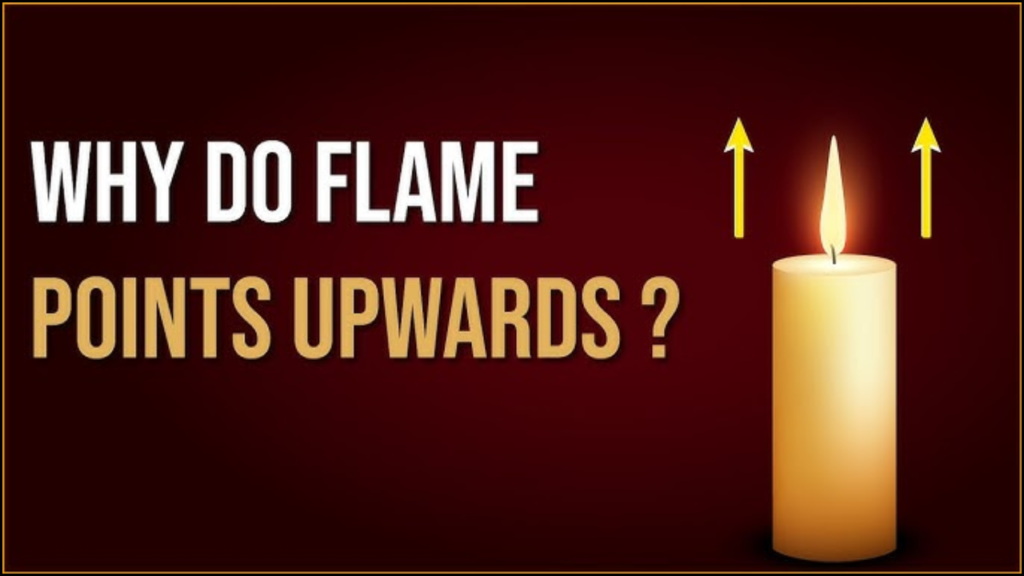
Sparks, whether from a campfire, welding torch, or fireworks, seem to defy gravity as they shoot skyward. While it looks magical, there is a hidden reason rooted in basic physics. Sparks rise because of the interaction between heat, air movement, and particle dynamics—a phenomenon that most people rarely consider, even when observing fire daily.
Understanding why sparks move upward reveals important lessons in heat transfer, convection, and buoyancy. It also has practical implications for safety, education, and fire management, helping people prevent accidents and visualize fundamental scientific concepts.
Table of Contents
Overview Of Upward Spark Motion
| Factor | Explanation |
|---|---|
| Hot Air | Heated air around sparks becomes lighter and rises |
| Convection | Rising air currents carry sparks upward |
| Particle Size | Small, lightweight sparks are easily lifted |
| Gravity | Acts downward but is initially overcome by upward airflow |
| Safety Implications | Sparks can ignite nearby flammable materials |
Heat Creates Lift
Sparks form when a material, such as metal or wood, is heated to a high temperature, causing tiny fragments to break away. These fragments glow due to intense heat, and the surrounding air also becomes hotter.
Hot air expands and becomes less dense than the cooler air around it. This creates an upward buoyant force that lifts the sparks, overriding gravity momentarily. The hotter the spark and the surrounding air, the faster and higher it rises.
Convection Currents
Rising sparks are carried by convection currents—continuous streams of hot air rising and cooler air moving in to replace it. These currents create invisible pathways for sparks to follow:
- Sparks are lifted almost immediately after forming
- Air movement is strongest near the heat source
- Turbulence or obstacles may redirect sparks
- Continuous convection sustains upward motion until sparks cool
Convection is the main reason sparks travel upward rather than falling straight to the ground.
Particle Characteristics
Not all sparks behave the same. Small, lightweight sparks are easily lifted by rising hot air, while larger, heavier fragments fall faster. The size and weight of the particle determine both its trajectory and how far it can travel.
This explains why welding, grinding, and burning small fuel fragments produce dramatic showers of sparks, while larger pieces remain closer to the fire source.
Environmental Factors
External conditions influence spark movement and trajectory:
- Wind can tilt sparks or carry them sideways
- Indoor ceilings restrict upward travel compared to open spaces outdoors
- Ventilation can redirect sparks safely or increase risk if uncontrolled
- Temperature and humidity subtly affect buoyancy and convection
Engineers and safety professionals account for these factors to reduce fire hazards in industrial and workshop environments.
Safety Considerations
Rising sparks pose real risks:
- They can ignite flammable materials in their path
- Sparks may reach overhead surfaces or equipment
- Proper use of shields, spark guards, and fire-resistant materials is essential
- Personal protective equipment (PPE) prevents burns or injuries
Recognizing upward spark behavior helps ensure both safety and efficient fire management.
Learning Prospects
Observing sparks provides a hands-on demonstration of physics principles:
- Buoyancy and density differences
- Convection currents in air
- Gravity versus lift for lightweight particles
These concepts can be taught using simple experiments in classrooms or workshops, making physics tangible and visually engaging.
Key Takeaways
The hidden reason sparks rise is the combination of hot air, convection currents, and particle dynamics. Gravity alone cannot overcome the upward buoyant force initially. Particle size, airflow, and environmental conditions determine how far and high sparks travel.
Sparks always move upward because heat transforms the surrounding air into rising currents that carry small particles skyward. This phenomenon combines simple physics principles with real-world safety implications, demonstrating that even the smallest sparks can teach big lessons about air movement, heat, and fire management.