Metal cutting technology is at the heart of every modern factory, fabrication shop and engineering workshop. Whether it is a car engine part, an aircraft bracket or a steel beam for a building, almost every metal component is cut and shaped before it reaches its final form.
In the past, cutting depended mostly on saws, lathes and skilled hands. Today, manufacturers use CNC machines, fibre lasers, waterjets and plasma systems that can cut with accuracy measured in fractions of a millimetre. These advances have lowered production costs, reduced waste and opened up well-paid careers for machinists, CNC programmers and production engineers.
Table of Contents
Understanding Metal Cutting Technology
Metal cutting is the process of removing unwanted material from a workpiece to get the required shape, size and surface finish. It can happen through mechanical force, heat, abrasive particles or even electrical energy, depending on the method used.
Broadly, cutting methods fall into two groups. Conventional or chip-forming methods, such as turning, milling and drilling, use a hard tool that physically shears away small chips of metal. Non-conventional methods, such as laser, plasma, waterjet and electrical discharge machining, remove material without direct heavy contact between tool and part.
Choosing the right method depends on the metal type, thickness, required tolerance, production volume and budget. A good process engineer weighs all these factors before setting up a production line.
Conventional Machining Methods
Chip-forming processes are still the most common way to shape metal parts with high precision. Most of them are now performed on CNC machines for better accuracy and repeatability.
Turning
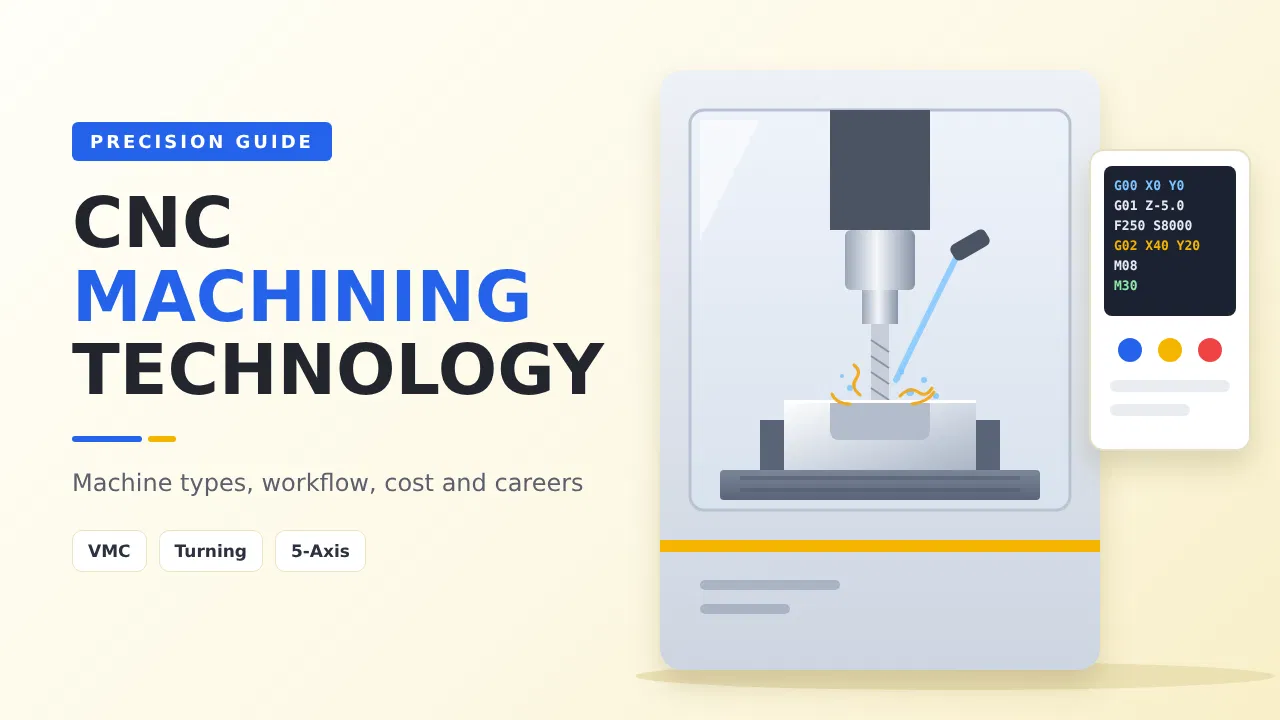
Turning is done on a lathe, where the workpiece rotates and a single-point cutting tool removes material. It is used to make shafts, pins, bushings, bolts and other round parts. CNC turning centres can complete complex profiles, threads and grooves in a single setup.
Milling
In milling, a rotating multi-tooth cutter moves across a fixed workpiece. It produces flat surfaces, slots, pockets and complex 3D shapes. Five-axis milling machines are widely used for moulds, dies, turbine blades and aerospace components.
Drilling, Boring and Grinding
Drilling creates holes, while boring enlarges and finishes them to precise dimensions. Grinding uses an abrasive wheel to achieve very fine surface finish and tight tolerances, often as the last step for hardened steel parts such as bearings and gears.
Sawing and Shearing
Band saws and circular saws are used to cut bars, pipes and profiles to length. Shearing machines cut sheet metal in straight lines without producing chips. Both are fast, low-cost methods used at the start of most fabrication jobs.
Advanced and Non-Conventional Cutting Methods
Advanced cutting technologies have changed how sheet metal and hard materials are processed. They offer speed, flexibility and the ability to cut complex shapes directly from digital drawings.
Laser Cutting
Laser cutting uses a focused beam of light to melt or vaporise metal along a programmed path. Fibre lasers have become the industry favourite because they are energy-efficient and cut mild steel, stainless steel, aluminium and brass quickly. The result is a narrow kerf, clean edges and very little need for secondary finishing.
Plasma Cutting
Plasma cutting forces an electrically conductive gas through a small nozzle at high speed, creating an arc hot enough to cut thick plates. It is cheaper than laser for heavy steel and is widely used in structural fabrication, shipyards and agricultural equipment manufacturing.
Waterjet Cutting
Waterjet machines use ultra-high-pressure water mixed with garnet abrasive to cut almost any material, including titanium, hardened steel, stone and composites. Since there is no heat, the material keeps its original properties, which is important for aerospace and defence parts.
Electrical Discharge Machining (EDM)
EDM removes metal through controlled electrical sparks between a wire or electrode and the workpiece. Wire EDM can cut extremely hard metals with intricate profiles and is a standard process in tool rooms for making dies, punches and precision moulds.
| Method | Main Strength | Typical Use |
|---|---|---|
| CNC Turning | Round, precise parts | Shafts, Fasteners |
| CNC Milling | Complex 3D shapes | Moulds, Aerospace |
| Fibre Laser | Fast, clean edges | Sheet Metal, Panels |
| Plasma | Thick steel at low cost | Structures, Shipyards |
| Waterjet | No heat damage | Titanium, Composites |
| Wire EDM | Hard metals, fine detail | Dies, Tool Rooms |
Cutting Tools and Tool Materials
In chip-forming processes, the cutting tool decides how fast and how accurately a job can be done. Tool makers such as Sandvik Coromant, Kennametal, ISCAR and Mitsubishi Materials invest heavily in new grades and coatings to extend tool life.
- High-speed steel (HSS) for general-purpose drills, taps and low-speed work
- Cemented carbide inserts for high-speed turning and milling of steel and cast iron
- Ceramic and cermet tools for hardened materials and fast finishing
- Cubic boron nitride (CBN) for hardened steel and superalloys
- Polycrystalline diamond (PCD) for aluminium, copper and composites
Coatings such as titanium nitride and aluminium titanium nitride reduce friction and heat, helping tools last longer. Proper use of coolant or minimum quantity lubrication also improves surface finish and protects the tool edge.
Key Factors That Affect Cutting Quality
Even with the best machines, poor settings can lead to rough surfaces, broken tools and wasted material. Machinists and programmers control several important parameters to get consistent results.
- Cutting speed, which affects heat generation and tool wear
- Feed rate, which decides productivity and surface roughness
- Depth of cut, which must suit machine power and part rigidity
- Workholding and fixture stability to avoid vibration and chatter
- Material hardness and machinability rating
Modern CAM software from companies like Autodesk and Siemens helps programmers simulate toolpaths before cutting begins. This reduces trial runs, prevents collisions and shortens setup time.
Automation and Smart Factory Integration
Metal cutting has become a major part of Industry 4.0. CNC machines from brands such as DMG Mori, Mazak, Haas and Trumpf can now be linked to factory software that tracks spindle load, cycle time and tool life in real time.
Automatic loading systems, robotic arms and pallet changers allow “lights-out” machining, where machines keep running overnight with little human supervision. Sensors detect tool wear and trigger replacements before quality drops, while predictive maintenance reduces unexpected breakdowns.
For manufacturers, these upgrades require significant capital. Many small and medium units fund CNC and laser machines through equipment finance, machinery loans and government MSME schemes, while machinery insurance protects these costly assets against breakdown and fire.
Safety Practices in Metal Cutting
Cutting operations involve sharp edges, flying chips, high heat, intense light and moving machine parts. Strict safety practices protect both workers and equipment.
- Safety glasses, face shields and cut-resistant gloves
- Machine guards, interlocks and emergency stop buttons
- Fume and dust extraction for laser and plasma cutting
- Hearing protection in high-noise workshops
- Regular training on lockout and tagout procedures
Employers often provide group health insurance and personal accident cover for machine operators, and skilled workers on contract are wise to arrange their own coverage as well.
Career Opportunities in Metal Cutting
The growth of automotive, aerospace, defence, railway and electric vehicle manufacturing has created steady demand for trained professionals. Popular roles include CNC operator, CNC programmer, VMC and HMC setter, laser machine operator, tool room machinist, quality inspector and production engineer.
In India, ITI courses in Machinist, Turner and Fitter trades are a common starting point, followed by CNC training at tool rooms and skill centres. Diploma and engineering graduates can move into CAM programming and process engineering, where salaries are higher. Experienced CNC programmers are also in demand in the Gulf, Europe and Japan.
Conclusion
Metal cutting technology has evolved from simple saws and lathes into a precise, automated and data-driven field. CNC machining, fibre lasers, plasma, waterjet and EDM now give manufacturers the speed and accuracy needed to compete globally. For businesses, investing in the right cutting process improves quality and cuts costs, and for workers, practical skills in CNC and modern cutting systems lead to stable, well-paying careers.