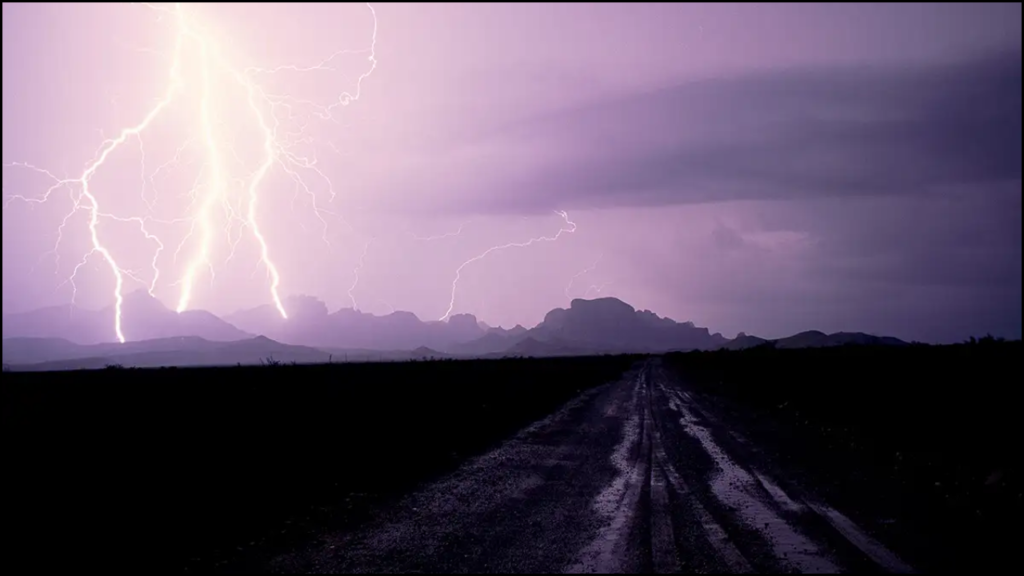
Sparks have fascinated humans for centuries, from the flick of a match to the dramatic showers from fireworks or welding sparks. One question often comes to mind: why do sparks always seem to fly upward instead of spreading randomly or falling? The answer lies in the basic principles of heat, air movement, and physics, which govern the behavior of sparks in both everyday and industrial settings.
Understanding why sparks rise provides insight into fundamental science concepts like convection, buoyancy, and particle motion. It also has practical implications for safety, fire prevention, and even educational experiments that illustrate real-world physics.
Table of Contents
Overview Of Upward Sparks
| Factor | Explanation |
|---|---|
| Heat Source | Sparks are produced by high-temperature processes like burning or welding |
| Air Movement | Hot air rises, carrying sparks with it |
| Particle Size | Small, lightweight sparks are easily lifted by upward airflow |
| Convection Currents | Continuous circulation reinforces upward motion |
| Safety Implications | Sparks can ignite nearby materials if not controlled |
Heat And Spark Formation
Sparks originate when a material—such as metal, wood, or paper—is heated to high temperatures, causing small particles to break away. These particles become incandescent and glow brightly, giving the appearance of flying sparks.
The intense heat also warms the surrounding air. As this air heats up, it becomes lighter and begins to rise, forming a natural pathway for sparks to follow. The hotter the source, the stronger the rising motion of both air and sparks.
Air Movement And Convection
Convection is the process by which hot air rises and cooler air moves in to replace it. Sparks are lightweight and easily caught in these rising air currents.
- Hot air expands and becomes less dense than the surrounding cooler air
- Rising air lifts spark upward almost immediately after they form
- Convection currents can be influenced by obstacles, ventilation, and wind
- Continuous circulation sustains upward motion until sparks cool
Understanding convection helps explain why sparks consistently rise rather than falling straight down.
Particle Size And Weight
The size and mass of spark particles are crucial. Tiny, lightweight particles are lifted easily by rising hot air, whereas larger, heavier fragments may fall quickly due to gravity.
This is why sparks from a small fire or welding torch can rise several feet, while heavier debris stays close to the source. Particle size determines both the height and the distance sparks can travel.
Pressure Differences
As air heats, its pressure temporarily increases in the immediate vicinity of the heat source. This creates a path of least resistance upward, further encouraging sparks to rise.
The combination of reduced density and pressure differences allows sparks to move upward efficiently, often reaching surprising heights compared to their source.
Environmental Factors
- Wind or breezes can tilt or carry sparks horizontally
- Indoor ceilings may slow upward movement compared to open outdoor spaces
- Enclosed spaces may create turbulence that disperses sparks unpredictably
- Open air allows sparks to rise faster and travel farther
Environmental conditions interact with heat and particle characteristics, shaping the trajectory of sparks in real-world scenarios.
Safety Considerations
Rising sparks can ignite flammable materials or cause burns if precautions are not taken. Practical safety measures include:
- Keeping combustible items away from sparks
- Using spark guards, shields, or screens in industrial or home settings
- Wearing protective gear, including gloves and goggles
- Ensuring proper ventilation to manage airflow
Awareness of spark behavior enhances safety during cooking, welding, or outdoor fire activities.
Learning Opportunities
Sparks provide a simple and visual demonstration of physics in action. They illustrate how heat affects air density, how convection currents form, and how particle size influences movement.
By observing sparks, students and enthusiasts can connect everyday experiences to core scientific principles, making learning both engaging and practical.
Parting Insights
Sparks rise because the hot air surrounding them becomes lighter and moves upward, forming convection currents that carry small, lightweight particles. Particle size, environmental airflow, and pressure differences further influence spark motion. Understanding this phenomenon is essential for safety, fire prevention, and scientific education.
The upward flight of sparks is a simple yet powerful example of physics at work. By recognizing the interplay between heat, air, and particle behavior, we can appreciate both the beauty and the science of sparks, while applying practical safety measures in everyday life and industrial settings.