The angle grinder is one of the most useful tools in any workshop, and also one of the most dangerous. A disc spinning at over 10,000 revolutions per minute can cut through steel, stone and, if misused, skin and bone in an instant.
Most angle grinder injuries come from a small set of causes: kickback, shattered discs, missing guards and inadequate protective equipment. The good news is that nearly all of them are preventable with the right setup and habits. Whether you use a grinder daily on a fabrication floor or occasionally at home, this guide covers choosing the right disc, inspecting the tool, wearing proper safety gear, holding and controlling the grinder, and avoiding the mistakes that lead to serious injuries.
Table of Contents
Understand the Main Hazards
Knowing how accidents happen makes it easier to prevent them. The biggest risks with angle grinders include:
- Kickback: the disc pinches or snags, throwing the grinder violently back toward the user.
- Disc breakage: a damaged, wrong or over-speed disc shatters and throws fragments at high speed.
- Flying debris and sparks: metal fragments, abrasive particles and sparks can injure eyes and start fires.
- Cuts: contact with the spinning disc causes deep lacerations, often to hands and thighs.
- Noise and vibration: long-term exposure can damage hearing and cause hand-arm vibration problems.
- Dust: cutting concrete, stone or tile releases crystalline silica, which can cause lung disease.
Choose the Right Disc for the Job
Using the wrong accessory is a leading cause of grinder accidents. Each disc is designed for a specific type of work and material.
| Disc Type | Main Use | Safety Note |
|---|---|---|
| Thin cut-off disc | Cutting metal | Never grind with the side |
| Grinding disc | Removing weld and metal | Hold at a shallow angle |
| Flap disc | Blending and finishing | Replace when backing shows |
| Wire wheel or cup | Rust and paint removal | Wires fly off, wear a face shield |
| Diamond blade | Concrete, stone and tile | Control silica dust |
Check the Speed Rating
Every disc carries a maximum safe speed in RPM. This must be equal to or higher than the no-load speed printed on the grinder. A disc rated below the grinder’s speed can burst apart. Also check that the disc diameter matches the grinder and guard size, and never fit a larger disc on a smaller grinder.
Check the Expiry Date
Resin-bonded cutting and grinding discs weaken with age and humidity. Many are marked with an expiry date on the metal centre ring. Store discs flat in a dry place and discard any that are past date, chipped, cracked, damp or dropped.
Never Fit Wood Blades
Toothed saw blades and chainsaw-style carving discs are extremely dangerous on angle grinders because they grab and kick back violently. Many grinder manufacturers specifically prohibit them. Use a circular saw or dedicated carving tool for wood instead.
Inspect the Grinder Before Every Use
A quick inspection takes less than a minute and can prevent serious accidents.
- Check the power cord and plug for cuts, or the battery and charger for damage.
- Make sure the guard is fitted, tight and correctly positioned.
- Confirm the side handle is screwed in firmly.
- Test the switch to make sure it turns off instantly when released.
- Inspect the flange and lock nut for wear, and use the correct flange orientation for the disc type.
- Look for cracks, chips or missing pieces on the disc.
After fitting a new disc, stand to the side and run the grinder at full speed for about one minute, keeping the disc pointed away from people. A faulty disc is most likely to fail during this test.
Never Remove the Guard
Removing the guard to reach awkward spots is one of the most common and dangerous shortcuts. The guard deflects fragments if a disc shatters and reduces the chance of the disc contacting your body. Position the guard between the disc and your body, with the open side facing away from you. Cutting operations often require a closed cut-off guard that covers both sides of the disc, so check the manufacturer’s instructions.
Wear the Right Protective Equipment
Eye and Face Protection
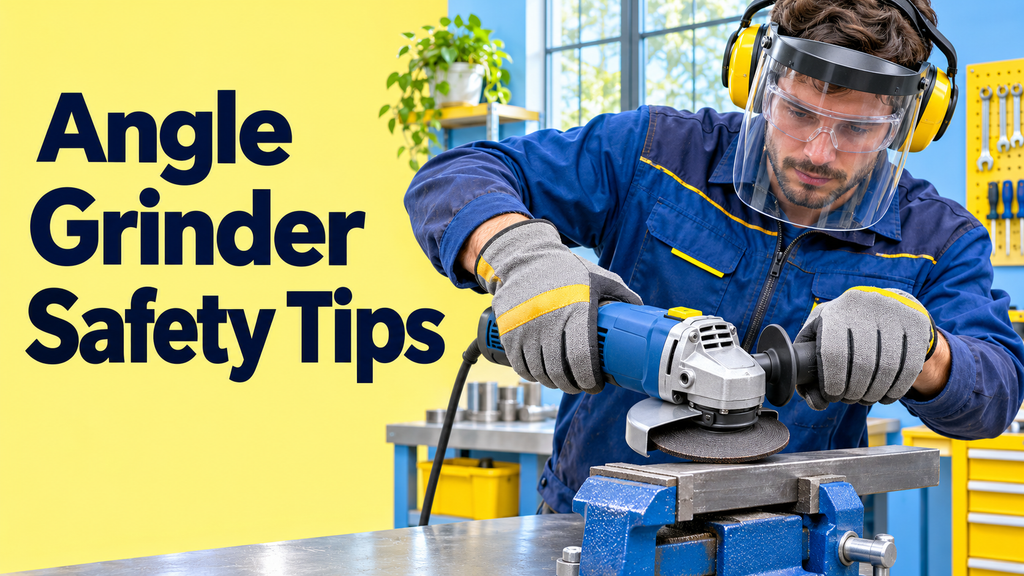
Wear safety glasses rated to ANSI Z87.1 or an equivalent standard at all times, and add a full face shield over the glasses. Fragments, wires and sparks travel fast enough to cut skin and penetrate eyes. Never rely on prescription glasses alone.
Hearing Protection
Angle grinders commonly produce noise well above safe levels for long periods, especially when cutting metal. Earplugs or earmuffs prevent gradual hearing loss, and earplugs also keep sparks out of the ears.
Respiratory Protection
Grinding metal produces fine particles, and cutting masonry produces silica dust. Use a respirator with suitable filters, and for concrete and stone use a dust shroud connected to a vacuum or a water-fed system to control silica at the source.
Gloves and Clothing
Wear close-fitting leather or cut-resistant gloves to protect against sparks and sharp edges. Avoid loose gloves when using wire wheels, as they can be caught and pulled in. Wear flame-resistant or heavy cotton clothing, roll down sleeves, remove jewellery and tie back long hair. Safety boots protect feet from dropped workpieces, and a leather apron adds protection for the thighs and torso.
Proper Grip and Body Position
Good technique keeps you in control even if the disc catches.
- Use both hands: one on the body or switch grip and one on the side handle.
- Stand balanced: keep feet apart and avoid overreaching or working above shoulder height.
- Stay out of the line of fire: keep your body to the side of the disc’s plane of rotation, never directly behind it.
- Let the tool work: apply light, steady pressure without forcing the disc.
- Wait for full stop: do not set the grinder down until the disc has completely stopped spinning.
Correct Working Angles
Grinding discs work best at a shallow angle of roughly 15 to 30 degrees to the surface, which removes metal evenly without gouging. Flap discs are usually held at a similar low angle for blending. Cut-off discs must stay at 90 degrees to the work, entering and leaving the cut in a straight line. Holding a cut-off disc at an angle puts side load on a thin disc that is not designed for it.
How to Prevent Kickback
Kickback happens when the disc binds, pinches or catches an edge. The grinder can jerk upward or backward with enormous force.
- Clamp the workpiece firmly in a vice or with clamps so it cannot move.
- Support both sides of a cut so the gap does not close and pinch the disc.
- Cut in straight lines and never twist the disc in the slot.
- Take extra care at corners, sharp edges and when breaking through the last part of a cut.
- Keep the disc moving away from you when grinding, so a snag pushes the tool away rather than towards you.
Modern grinders offer safety features that help control kickback, including electronic kickback detection, soft start, electric brakes that stop the disc in seconds and paddle switches that cut power when released. When buying a new grinder, these features are worth the extra cost. Major brands such as Makita, DeWalt, Milwaukee, Bosch and Metabo offer models with them.
Prevent Fires and Protect Others
Grinding sparks can travel several metres and ignite sawdust, rags, fuel and solvents. Clear flammable materials from the area, direct sparks away from people and combustibles and keep a fire extinguisher nearby. In workplaces, hot work permits and a fire watch after grinding are often required.
Use welding screens or barriers to protect nearby workers, and make sure bystanders wear eye protection. Never grind containers that held fuel or chemicals unless they have been professionally cleaned and certified safe.
Safe Storage and Maintenance
Unplug the grinder or remove the battery before changing discs, adjusting the guard or cleaning. Use the spindle lock and correct wrench, never a hammer. Clean dust from vents regularly to prevent overheating, and have damaged cords, switches or worn brushes repaired by a qualified technician. Store the grinder and discs in a dry place away from children.
Training and Workplace Rules
In the United States, OSHA requires guards on abrasive wheel equipment and expects employers to provide suitable protective equipment and training. Abrasive wheel safety is also covered by industry standards such as ANSI B7.1. Employers who invest in tool safety training reduce injuries, lost work time and workers’ compensation claims, and small businesses should review their liability insurance to make sure tool-related incidents are covered.
Final Thoughts
Angle grinder safety comes down to the right disc, an intact guard, proper protective equipment, a firm two-handed grip and a secure workpiece. Inspect the tool before every use, respect the disc’s speed rating and expiry date, and never take shortcuts like removing the guard or fitting wood blades. These simple habits prevent the vast majority of grinder injuries.
FAQs
1. Can I use an angle grinder without the guard?
No. The guard protects you from shattered discs and contact with the spinning wheel, and removing it greatly increases injury risk.
2. What causes angle grinder kickback?
Kickback happens when the disc pinches, binds or snags an edge, often due to an unsupported workpiece or twisting the disc in a cut.
3. Should I wear gloves when using an angle grinder?
Yes, close-fitting leather or cut-resistant gloves help, but avoid loose gloves that could catch on a wire wheel.