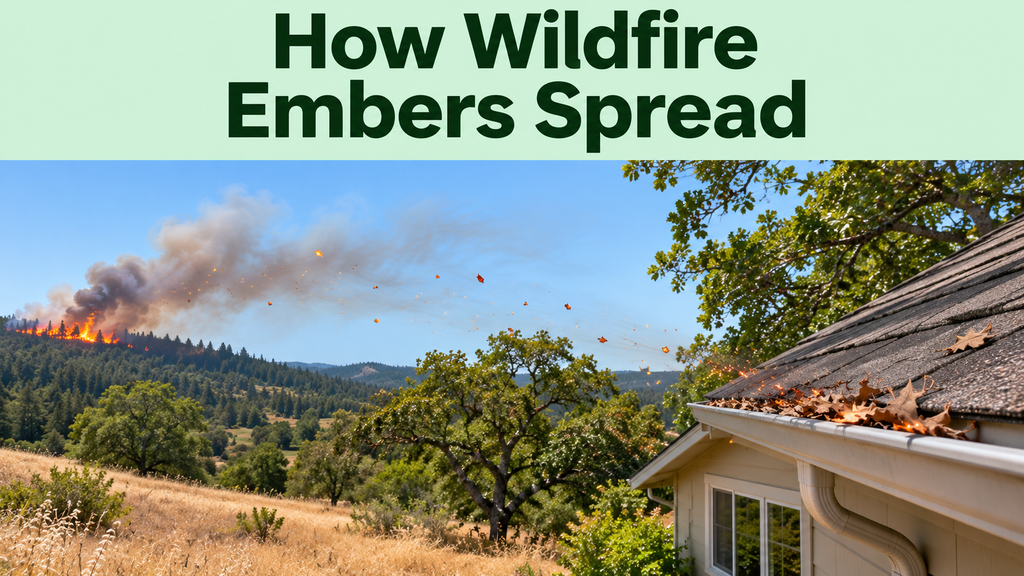
Most homes lost in wildfires are not consumed by a wall of flames. They catch fire from small, glowing embers that land on or inside the house, sometimes long before the main fire arrives.
Embers, also called firebrands, are burning pieces of bark, twigs, leaves and building materials that are lifted by a fire and carried by the wind. They can travel far beyond the fire front, start new spot fires and ignite homes through vents, gutters, decks and mulch. Fire safety researchers estimate that embers and the small fires they start are responsible for most home ignitions in wildfires, with some estimates as high as 90 percent. Understanding how embers spread is the key to protecting property, lowering insurance risk and keeping families safe.
Table of Contents
What Wildfire Embers Are
Embers are fragments of burning material broken off from vegetation or structures. In forests and shrublands, they come mainly from bark flakes, pine cones, twigs, dry leaves and needles. In communities, burning fences, roofs, decks, outdoor furniture and entire houses become major ember sources.
Embers vary from tiny sparks to pieces several centimetres long. Smaller embers burn out quickly but can arrive in enormous numbers, while larger, denser embers, such as bark chunks, can stay alight long enough to travel considerable distances and ignite whatever they land on.
How Embers Are Lifted and Carried
Convection Columns
A wildfire heats the air above it, creating a rising column of hot gases and smoke. This updraft lifts embers high into the air. The more intense the fire, the stronger the column and the higher embers can be lofted. In extreme fires, the column can form towering pyrocumulus clouds that carry burning material thousands of feet up.
Wind Transport
Once airborne, embers are pushed by the wind. Strong, dry winds such as the Santa Ana and Diablo winds in California carry embers far ahead of the flames. The distance an ember travels depends on wind speed, the height it reaches, its size and shape, and how long it keeps burning.
Spotting Distances
Embers commonly start spot fires a few hundred metres to around a kilometre ahead of the main fire. In severe wind-driven fires, spotting over several kilometres has been recorded, and extreme Australian bushfires have produced spot fires reported tens of kilometres away. This is why rivers, highways and firebreaks do not always stop a wildfire.
Ember Storms and Ember Showers
During wind-driven fires, homes can face an ember storm, a dense blizzard of glowing particles that lasts minutes or even hours. Embers pile up in corners, against walls, on roofs and in gutters, where they can smoulder until something catches. Ember attack often begins well before flames reach a neighbourhood and continues after the main fire front has passed, which is why homes sometimes ignite hours later.
How Embers Ignite Homes
Embers do not need a large fuel source. They only need a small, dry, receptive material in a sheltered spot. Common ignition points include:
- Vents: attic, eave, foundation and crawlspace vents let embers into the home’s hidden spaces.
- Gutters and roofs: dry leaves and needles collect embers, and wood shake roofs ignite easily.
- Decks and porches: combustible decking and debris trapped between boards catch embers.
- Mulch and plants: wood mulch, dry grass and shrubs close to walls ignite and spread flames to siding and windows.
- Firewood and outdoor furniture: stacked wood, cushions, doormats and stored items near the house act as kindling.
- Fences and gates: wooden fences attached to the house act like wicks leading fire directly to walls.
- Windows: nearby burning materials can crack single-pane glass with radiant heat, letting embers inside.
- Garages and openings: gaps around garage doors and open windows allow embers indoors.
House-to-House Fire Spread
When homes are close together, a burning house becomes a powerful ember and heat source for its neighbours. Wind-driven embers from one structure ignite the next, creating an urban conflagration that can move through neighbourhoods far from wildland vegetation. Recent destructive fires, including the January 2025 Los Angeles area fires, showed how wind-driven embers and structure-to-structure spread can devastate entire communities.
Weather and Fuel Conditions That Increase Risk
- High winds, especially sustained gusty winds.
- Low relative humidity, which dries out fine fuels.
- Drought and long dry spells.
- Dry grass, pine needles and leaf litter.
- Steep slopes, which speed fire spread uphill.
- Large amounts of dead vegetation and diseased trees.
Red flag warnings issued by weather services signal dangerous combinations of wind and dryness. On these days, ember spread can be extreme and residents should be ready to evacuate.
The Home Ignition Zone
Experts divide the area around a home into zones to reduce ember and flame exposure.
| Zone | Distance From Home | Key Actions |
|---|---|---|
| Immediate zone | 0 to 5 feet | Noncombustible ground cover, nothing flammable |
| Intermediate zone | 5 to 30 feet | Spaced plants, mowed grass, pruned trees |
| Extended zone | 30 to 100 feet or more | Reduce dense fuels and dead vegetation |
Immediate Zone
The first five feet around a home is the most critical area for ember defence. Replace wood mulch with gravel, pavers or bare soil, remove plants and dead material next to walls, and move firewood, propane tanks, trash bins and patio furniture away from the house. California has been developing Zone 0 rules that set ember-resistant standards for this area in high-risk locations.
Intermediate and Extended Zones
Further out, keep grass short, space shrubs and trees so fire cannot easily move between them, prune lower branches and clear fallen leaves and needles regularly. On slopes, wider clearance may be needed.
Hardening Your Home Against Embers
Home hardening means upgrading the building itself to resist ember entry and ignition.
- Roof: choose a Class A fire-rated roof and seal gaps at roof edges and ridges.
- Vents: install ember-resistant vents or cover them with fine metal mesh, commonly 1/8 inch or smaller.
- Gutters: clean them regularly and fit noncombustible gutter guards.
- Eaves: box in open eaves to stop embers lodging under the roof.
- Windows: use multi-pane windows with at least one tempered pane.
- Siding: choose noncombustible materials like fibre cement, stucco or masonry, especially near the ground.
- Decks: use fire-resistant decking, clear debris between boards and enclose the space underneath.
- Fences: replace the last five feet of wooden fence next to the house with metal or masonry.
- Garage doors: add weather stripping to close gaps.
Many hardening steps are inexpensive, such as gutter cleaning and vent screens, while others, like roof replacement, are major investments. Homeowners in high-risk areas can sometimes access state grants or local programmes that help with retrofit costs.
Why Some Homes Survive While Neighbours Burn
After major wildfires, investigators often find untouched green trees beside homes reduced to ashes. This pattern shows that many houses were not ignited by passing flames but by embers finding a weak point. Homes that survive typically share a few traits: a clean, noncombustible area right around the walls, screened vents, clear gutters and roofs, and few flammable items stored against the structure.
Distance from neighbouring buildings also matters. Where homes are tightly packed, one burning structure can expose others to intense heat and embers, so community-wide mitigation is often more effective than individual efforts alone. Neighbourhood programmes such as Firewise USA help residents work together on shared risks.
Wildfire Risk and Home Insurance
Wildfire risk has become a major factor in home insurance pricing and availability in many western states. Some insurers have raised premiums or stopped writing new policies in high-risk areas, pushing more homeowners to state-backed last-resort plans. In California, regulations require insurers to recognise certain wildfire mitigation efforts, and the Wildfire Prepared Home designation from the Insurance Institute for Business and Home Safety can help qualifying homeowners access discounts.
Keep records and photos of mitigation work, review coverage limits to make sure they reflect today’s rebuilding costs, and check whether your policy includes additional living expenses if you must leave your home. A detailed home inventory stored online makes claims easier after a disaster.
Preparing for Ember Season
- Sign up for local emergency alerts and know your evacuation zones.
- Prepare a go-bag with documents, medications, chargers and essentials.
- Move flammable items away from the house when fire weather is forecast.
- Close windows, vents and garage doors before evacuating.
- Install smoke alarms and keep garden hoses connected.
- Follow evacuation orders immediately; never wait to see the flames.
Final Thoughts
Wildfire embers spread by riding hot convection columns and strong winds, landing far ahead of the flames and igniting homes through small, vulnerable spots. Protecting a home means creating a noncombustible five-foot zone, managing vegetation, hardening vents, roofs, gutters, decks and windows, and keeping insurance and evacuation plans up to date. Small, consistent actions can make the difference between a home that survives and one that is lost.
FAQs
1. How far can wildfire embers travel?
Embers commonly travel up to about a kilometre, and in extreme wind-driven fires they can travel several kilometres or more.
2. What part of a house is most vulnerable to embers?
Vents, gutters, roofs, decks and the area within five feet of the home are the most common ignition points.
3. Do ember-resistant vents really help?
Yes. Fine metal mesh or certified ember-resistant vents greatly reduce embers entering attics and crawlspaces.