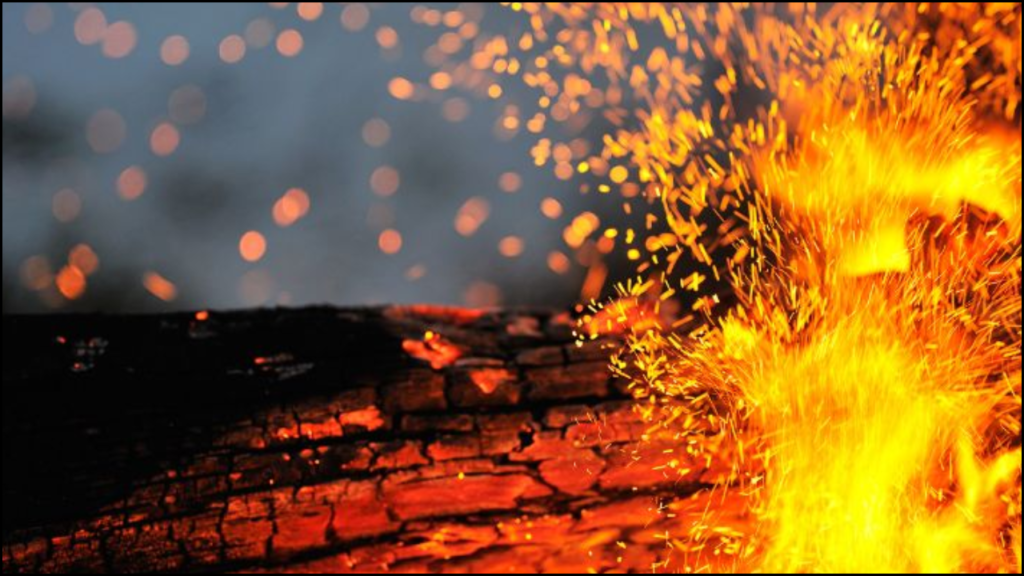
The behavior of sparks changes significantly depending on whether a fire is indoors or outdoors. One noticeable difference is that sparks tend to rise faster and travel farther in outdoor environments. This phenomenon is driven by differences in air movement, temperature, and airflow patterns, all of which affect how heat and buoyancy interact with tiny particles.
Understanding why sparks behave differently in open versus confined spaces is important for both science learning and safety. Observing these differences helps explain convection, air density, and environmental influence on fire behavior.
Table of Contents
Overview Of Spark Behavior
| Factor | Explanation |
|---|---|
| Airflow | Open air allows unrestricted upward movement |
| Heat Dissipation | Outdoor air spreads heat quickly |
| Buoyancy | Less confined air enhances lift |
| Obstructions | Indoors, ceilings show slow movement upward movement |
| Safety Implication | Outdoor sparks may travel farther and ignite surrounding materials |
Open Air vs. Confined Air
Indoors, air is confined by walls, ceilings, and furniture. Rising hot air from a fire quickly encounters these boundaries, which slows convection and limits the height sparks can reach. The ceiling traps warm air, and the limited space restricts airflow, reducing the upward speed of sparks.
Outdoors, air is unrestricted. Hot air rises freely without hitting ceilings, walls, or vents. This allows sparks to accelerate upward faster and maintain their motion over greater distances. Open air provides a natural channel for convection currents to develop fully.
Temperature and Heat Dissipation
Outdoor environments typically have larger volumes of cooler surrounding air. As hot air rises, it remains buoyant for longer because it continuously pushes against cooler air below. This sustained temperature difference supports faster upward motion of sparks.
Indoors, the limited air volume heats up quickly. The temperature gradient between the hot air near the fire and the surrounding air diminishes faster, reducing the lift for sparks. Less heat difference indoors slows upward movement compared to open spaces.
Airflow Patterns
- Outdoor air moves freely and allows smooth vertical flow
- Wind and breezes can enhance upward motion
- Indoors, HVAC systems and obstacles create turbulent air
- Turbulence slows or diverts sparks from a straight upward path
- Smooth convection outdoors increases spark rise speed
Outdoor airflow, including even light winds, supports vertical movement and can carry sparks farther, whereas indoor airflow patterns often interfere with upward lift.
Buoyant Lift
Sparks rise because hot, low-density air pushes them upward. In open outdoor spaces, there is no ceiling to limit this buoyant force. The rising air column remains continuous, allowing sparks to accelerate and stay aloft longer.
Indoors, the ceiling and limited vertical space restrict the buoyant column. As air encounters resistance, sparks lose upward momentum sooner. Buoyant lift is less effective in confined spaces.
Particle Behavior
Sparks are tiny and lightweight, making them highly responsive to the surrounding air. Outdoors, they are fully carried by rising hot air and can travel farther before cooling.
Indoors, sparks encounter slower air movement and obstacles, which causes them to lose energy faster. Particles cool more quickly and drop sooner due to reduced airflow.
Wind Influence
Even light outdoor wind can enhance upward spark motion. Wind pushes cooler air into the base of the fire, reinforcing convection currents. This effect is absent indoors unless ventilation systems are carefully designed.
Stronger outdoor winds can carry sparks horizontally as well, which increases the overall distance sparks travel compared to indoor fires.
Ceiling Effects Indoors
Ceilings limit the vertical height sparks can achieve. Rising hot air hits the ceiling and spreads horizontally, slowing upward motion and dissipating energy.
This explains why indoor fireplaces or stoves produce sparks that appear shorter and more contained than outdoor fires like bonfires or BBQs.
Safety Implications
- Outdoor sparks can ignite nearby dry grass, leaves, or structures
- Indoors, sparks can reach flammable surfaces if precautions are not taken
- Understanding spark behavior informs safe placement of fire pits, stoves, or candles
- Outdoor fires require monitoring of wind and surrounding materials
Homeowners and educators alike benefit from knowing how the environment affects spark movement for both practical safety and teaching purposes.
Wrapping Up
Sparks rise faster outdoors than indoors because open air allows unrestricted convection, maintains stronger temperature gradients, and supports continuous buoyant lift. Indoors, ceilings, walls, and limited airflow reduce upward motion and energy. Recognizing these differences helps explain fire behavior, informs safety measures, and provides real-world examples of physics principles like heat transfer, air density, and convection currents.