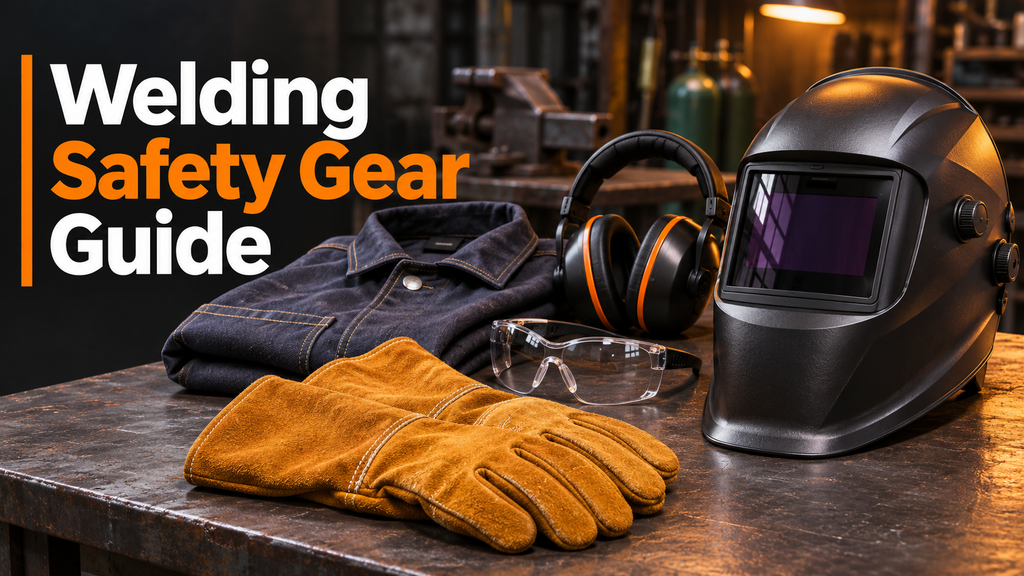
Welding produces intense light, extreme heat, flying sparks and toxic fumes all at once. The right safety gear protects your eyes, skin, lungs and hearing every time you strike an arc.
Whether you are a professional fabricator, a pipeline welder or a hobbyist working in a home garage, personal protective equipment is not optional. Arc flash can burn the eyes in seconds, molten spatter can ignite ordinary clothing, and long-term fume exposure is linked to serious lung disease and cancer. This guide covers every essential piece of welding safety gear, the standards to look for, how to choose the right equipment for each process and how to keep it in good condition.
Table of Contents
Why Welding Safety Gear Matters
Welding hazards are both immediate and long term. Ultraviolet and infrared radiation from the arc can cause arc eye, a painful burn of the cornea that feels like sand in the eyes, along with skin burns similar to severe sunburn. Sparks and slag can travel several metres and cause burns or fires.
Fumes are the hidden danger. Welding fumes contain fine metal particles and gases, and the International Agency for Research on Cancer classifies welding fumes as carcinogenic to humans. Stainless steel welding releases hexavalent chromium, while manganese in some consumables is linked to nervous system damage. Good gear, combined with ventilation and training, sharply reduces these risks and helps employers stay compliant with workplace safety rules.
Welding Helmets
A welding helmet protects the face, eyes and neck from radiation, sparks and heat. It is the single most important piece of welding gear.
Passive vs Auto-Darkening Helmets
Passive helmets use a fixed dark lens, usually shade 10. They are inexpensive and reliable, but welders must flip the helmet down just before striking the arc, which can lead to poor positioning and neck strain.
Auto-darkening helmets use a filter that switches from a light state to a dark shade within a fraction of a millisecond when the arc starts. They improve accuracy, reduce fatigue and allow continuous work, which makes them the preferred choice for most welders today.
Features to Compare
- Variable shade range: a range of roughly 5 to 13 suits most processes, from cutting to heavy stick welding.
- Arc sensors: four sensors detect the arc more reliably than two, especially in out-of-position work.
- Viewing area: larger lenses improve visibility for complex joints.
- Optical clarity: look for a 1/1/1/1 optical class rating for the clearest, most distortion-free view.
- Grind mode: lets you grind without removing the helmet.
- Sensitivity and delay controls: help with low-amperage TIG and fine-tune how quickly the lens returns to light.
- Comfort: a lightweight shell and adjustable headgear reduce neck strain on long shifts.
In the United States, helmets and lenses should meet ANSI Z87.1, and in Europe the EN 379 standard covers auto-darkening filters. Well-known manufacturers include Lincoln Electric, Miller, ESAB, 3M Speedglas, Optrel and Jackson Safety.
Choosing the Right Lens Shade
The correct shade depends on the welding process and amperage. Too light a shade risks eye damage, while too dark a shade makes it hard to see the weld pool. Start darker and adjust lighter until the puddle is clearly visible.
| Process | Common Shade Range | Tip |
|---|---|---|
| Stick (SMAW) | 10 to 13 | Go darker at higher amperage |
| MIG (GMAW) | 10 to 13 | Flux-core often needs darker |
| TIG (GTAW) | 8 to 12 | Raise sensor sensitivity |
| Plasma cutting | 8 to 11 | Depends on cutting current |
| Oxy-fuel cutting | 3 to 6 | Use goggles or shaded glasses |
Always wear safety glasses under your helmet. When you lift the helmet to chip slag or grind, the glasses keep debris out of your eyes.
Welding Gloves
Gloves protect your hands from heat, spatter, sharp edges and electric shock. Different processes call for different gloves:
- Stick welding gloves: thick, insulated cowhide or elk leather with long cuffs to handle heavy spatter and high heat.
- MIG gloves: medium-weight leather that balances heat protection with enough dexterity to handle the gun.
- TIG gloves: thin goatskin, deerskin or kidskin for fine control of the torch and filler rod.
Look for gloves stitched with Kevlar thread, which resists burning, and a gauntlet cuff that covers the jacket sleeve. Never weld with wet or torn gloves, as moisture increases the risk of electric shock and holes let sparks reach your skin.
Protective Clothing
Ordinary synthetic clothing such as polyester or nylon can melt and stick to skin when hit by sparks. Welders should wear flame-resistant materials that cover all exposed skin.
Jackets and Sleeves
- Flame-resistant cotton jackets: lightweight and breathable, good for light MIG and TIG work.
- Leather jackets: the highest protection for heavy spatter, overhead work and stick welding, though hotter to wear.
- Hybrid jackets: leather sleeves with a flame-resistant cotton body offer a balance of comfort and protection.
- Welding sleeves and bibs: add protection where spatter is heaviest without wearing a full leather jacket.
Choose garments tested for welding use, such as those meeting ISO 11611 in Europe. Button collars and cuffs, avoid pockets that can catch sparks, and wear trousers without cuffs over the top of your boots.
Head and Neck Protection
A flame-resistant welding cap or balaclava protects the scalp, ears and neck from spatter, especially during overhead welding. Hair should be tied back and covered.
Safety Footwear
Feet face falling metal, hot slag and electrical hazards. Welding boots should be made of leather, with safety toes and slip-resistant, heat-resistant soles. In the United States, look for boots that meet ASTM F2413.
Slip-on or pull-on boots are often preferred because sparks can lodge in laces. Metatarsal guards add protection for the top of the foot in heavy fabrication shops, and spats or leather boot covers help keep hot spatter out.
Respiratory Protection and Ventilation
Breathing protection is often overlooked, yet it guards against the most serious long-term health risks. The first line of defence is ventilation, followed by respirators where fumes remain.
Ventilation and Fume Extraction
Local exhaust ventilation captures fumes at the source before they reach the welder’s breathing zone. Options include portable fume extractors, fixed extraction arms and fume-extraction MIG guns. Natural ventilation alone is rarely enough indoors or in confined spaces.
Choosing a Respirator
- Disposable particulate respirators: N95 or higher-rated masks designed for welding offer basic protection for occasional use.
- Half-mask respirators: reusable masks with P100 filters capture fine metal particles, and some fit under a welding helmet.
- Powered air-purifying respirators: PAPR systems integrated with welding helmets blow filtered air across the face, offering high protection and comfort, especially for stainless steel and galvanised work.
In workplaces, employers should assess fume exposure, provide fit testing for tight-fitting respirators and follow occupational exposure limits for metals such as hexavalent chromium and manganese.
Special Care With Coated Metals
Galvanised steel releases zinc oxide fumes that can cause metal fume fever, a flu-like illness with chills, fever and aches. Painted, plated or oily metals can also release harmful gases. Remove coatings from the weld area where possible, position yourself upwind of the plume and never weld near chlorinated cleaning solvents, which can form toxic gases under the arc.
Hearing Protection
Grinding, air arc gouging, plasma cutting and hammering can produce noise loud enough to damage hearing over time. Foam earplugs or earmuffs rated for the noise level protect hearing, and earplugs also stop sparks from entering the ear canal during overhead welding.
Fire Safety Equipment
Hot work causes many workplace and home fires. Keep a suitable fire extinguisher within reach, clear flammable materials from the area or cover them with welding blankets, and use welding screens to protect nearby workers from arc flash.
Smouldering materials can ignite long after work stops, so many workplaces require a fire watch to remain for at least 30 minutes after welding ends. Business owners should also review commercial property and general liability insurance, as welding work is a common source of fire claims.
Complete Welding PPE Checklist
- Welding helmet with the correct shade for your process.
- Safety glasses worn under the helmet.
- Process-appropriate welding gloves.
- Flame-resistant or leather jacket, sleeves and trousers.
- Leather safety boots, ideally slip-on.
- Welding cap or balaclava.
- Respirator suited to the materials being welded.
- Earplugs or earmuffs.
- Fire extinguisher, welding blankets and screens.
Caring for Your Gear
Inspect equipment before every shift. Replace cracked or pitted helmet cover lenses, check auto-darkening batteries, and discard gloves and jackets with holes or burn-through. Keep leather dry and clean, store respirator filters in sealed bags and replace them on schedule. Well-maintained gear lasts longer and protects better.
Final Thoughts
The right welding safety gear protects you from arc radiation, burns, toxic fumes, noise and fire. Invest in a quality auto-darkening helmet, process-specific gloves, flame-resistant clothing, proper boots and respiratory protection, and back them up with good ventilation and fire safety practices on every job.
FAQs
1. What shade should I use for MIG welding?
Most MIG welding uses shade 10 to 13, depending on amperage. Start darker and adjust until the weld pool is clear.
2. Do I need a respirator for welding?
Yes, when ventilation cannot keep fumes away from your breathing zone, especially with stainless steel, galvanised metal or confined spaces.
3. Can I weld in regular cotton clothing?
Untreated cotton is better than synthetics but can still ignite. Flame-resistant cotton or leather is much safer.