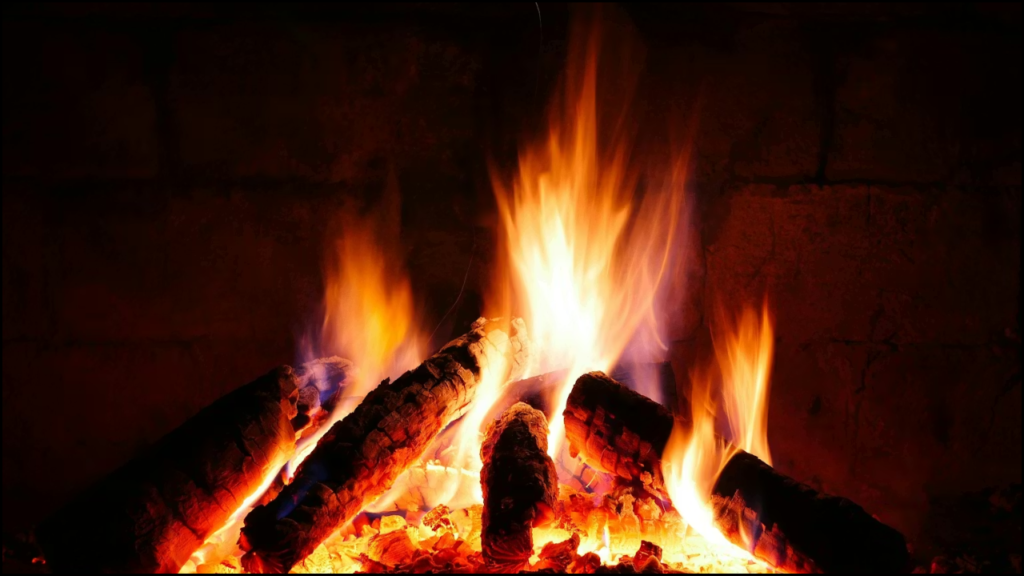
Have you ever wondered why flames and sparks always move upward? The answer comes down to one simple physics principle: hot air rises. This basic law of nature explains everything from the flicker of a candle to the spectacular showers of sparks from a welding torch or campfire. Understanding this principle not only satisfies curiosity but also has practical applications in safety, science education, and fire management.
The upward motion of sparks and flames is a vivid demonstration of how heat affects air density, creates convection currents, and interacts with particle physics. By studying this behavior, we can predict spark trajectories, prevent accidents, and even use sparks as a tool for teaching physics.
Table of Contents
Overview Of Rising Fire And Sparks
| Factor | Explanation |
|---|---|
| Heat Source | Sparks form from high-temperature processes like burning, welding, or grinding |
| Air Density | Heated air is lighter and rises above cooler surrounding air |
| Convection Currents | Upward moving air carries sparks along its path |
| Particle Characteristics | Small, lightweight sparks are lifted more easily than heavy ones |
| Safety Implications | Sparks can ignite nearby flammable materials if uncontrolled |
The Physics Rule: Hot Air Rises
The principle is straightforward: when air is heated, it expands, becomes less dense, and rises above the surrounding cooler air. Sparks are caught in these rising currents immediately after formation, giving the appearance that they “defy” gravity.
The hotter the air, the faster it rises, which is why sparks from intense heat sources, like welding or fireworks, can soar several feet above the source. Gravity still acts on the sparks, but initially, the upward force of hot air and convection dominates.
Convection Currents Carry Sparks
Convection is the continuous circulation of air caused by differences in temperature. Hot air rises, and cooler air moves in to replace it, forming upward streams that transport sparks:
- Sparks are carried upward almost instantly after formation
- Stronger heat produces faster and higher convection currents
- Turbulence, obstacles, and ventilation can alter spark trajectories
- The process continues until the sparks cool and convection weakens
This explains why sparks don’t simply fall immediately but follow an upward path.
Particle Size And Weight
The behavior of sparks also depends on their size and weight. Small, lightweight particles are easily carried by rising air, while heavier fragments fall closer to the source.
This distinction accounts for the dramatic showers of sparks seen during welding or grinding compared to larger, heavier debris that doesn’t rise far. Particle size determines how long sparks stay airborne and how high they can travel.
Environmental Influences
External conditions modify spark motion:
- Wind or breezes can carry sparks sideways or tilt their trajectory
- Indoor ceilings may restrict upward movement compared to open air outdoors
- Ventilation can safely redirect sparks or, if poorly managed, increase fire risks
- Humidity and air temperature subtly affect the buoyancy of hot air
By understanding these factors, engineers and safety professionals can better predict and control spark behavior.
Safety Considerations
Rising sparks are a potential hazard if flammable materials are nearby. Safety precautions include:
- Keeping combustibles away from spark zones
- Installing shields, barriers, or welding curtains
- Wearing appropriate PPE such as flame-resistant clothing, gloves, and goggles
- Managing airflow and ceiling areas in industrial or workshop environments
These measures minimize fire risks and protect personnel from injuries.
Education Opportunities
Observing rising sparks provides a clear example of physics in action. Students can learn about:
- Buoyancy and density differences in gases
- Convection currents and heat transfer
- The interplay of gravity and lift for lightweight particles
Using sparks in controlled experiments helps visualize these principles and makes abstract physics concepts tangible.
In Summary
The single physics rule “hot air rises” explains why sparks and flames move upward. Convection currents carry lightweight particles along their path until they cool, while environmental factors and particle size influence trajectory and height. Recognizing this principle is essential for safety, fire management, and educational purposes.
From backyard campfires to industrial welding, sparks and flames rise due to a simple yet powerful physical law. By understanding the science behind their motion, we can appreciate the beauty of sparks, predict their behavior, and implement safety measures, turning a familiar phenomenon into a practical lesson in physics and fire management.