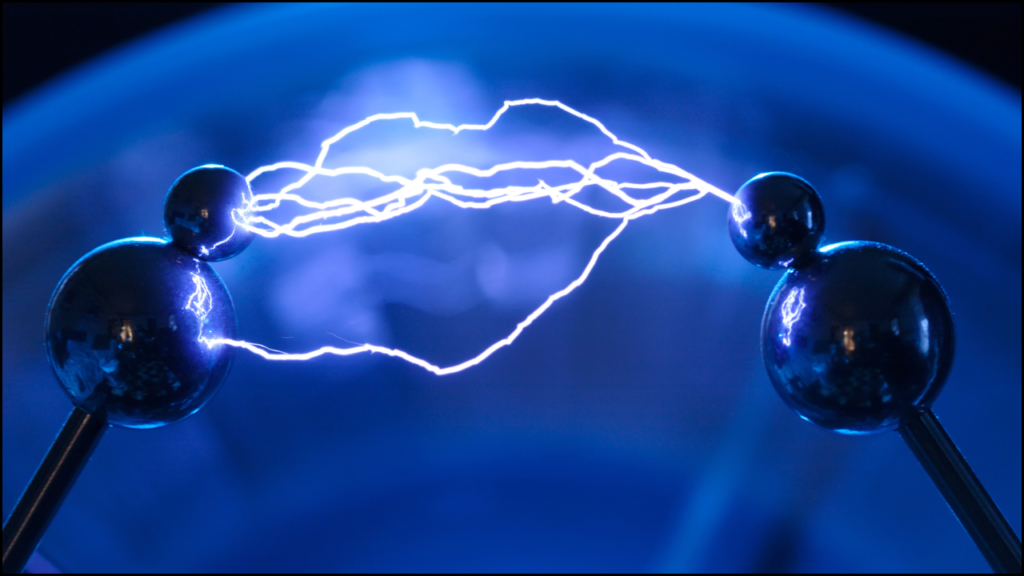
Sparks, whether from a campfire, welding torch, or fireworks, have a seemingly magical behavior—they rise instead of falling. The explanation lies in one of the simplest and most fundamental laws of physics: hot air rises. This principle, combined with particle behavior, convection, and buoyancy, governs the upward motion of sparks in both natural and industrial settings.
Understanding why sparks rise isn’t just a curiosity—it has practical applications in safety, science education, and everyday fire management. By breaking down the physics, we can predict spark behavior and take precautions to prevent accidents.
Table of Contents
Overview Of Spark Physics
| Physics Factor | Explanation |
|---|---|
| Heat Source | Sparks form from high-temperature burning or friction |
| Air Density | Hot air is less dense and rises |
| Convection | Rising hot air carries sparks upward |
| Particle Size | Small, lightweight sparks are lifted more easily |
| Safety Implications | Sparks can ignite materials above or nearby |
The Law: Hot Air Rises
The core principle behind rising sparks is simple: heated air becomes less dense than the surrounding cooler air. This lower density creates a buoyant force that causes the air—and anything carried with it, like sparks—to move upward.
In practical terms, this explains why sparks from a fire or welding operation naturally travel vertically. The hotter the spark and the surrounding air, the stronger the upward lift, creating dramatic visual effects.
Convection Currents And Sparks
Rising hot air does not move in isolation—it forms convection currents. These currents create invisible streams that carry sparks upward:
- Hot air expands and rises, pulling cooler air toward the base
- Sparks are caught in these upward currents almost instantly
- Continuous airflow sustains spark movement until particles cool
- Obstacles or turbulence can divert sparks, influencing the trajectory
Convection explains why sparks don’t just hover near the flame but soar several feet above the source.
Particle Size And Behavior
Not all sparks rise equally. Tiny, lightweight particles are easily lifted by convection, while larger fragments may fall more quickly due to gravity.
This relationship between size, weight, and lift is why welding, grinding, or burning small fuel pieces produces showers of sparks that seem to fly upward, while larger debris remains closer to the source.
Environmental Influences
External factors can modify spark trajectories:
- Wind can tilt or push sparks sideways
- Indoor ceilings slow upward motion compared to outdoor open air
- Ventilation can redirect sparks into safe or unsafe zones
- Humidity and air temperature slightly affect buoyancy and rise speed
Understanding these influences helps in predicting and controlling spark behavior in both controlled and uncontrolled environments.
Safety Implications
Rising sparks are more than a visual effect—they are a potential hazard:
- Sparks can ignite overhead combustible materials, such as wooden beams or storage items
- Even small sparks can start fires on dry grass, paper, or textiles
- Protective measures include using spark guards, fire-resistant surfaces, and proper PPE
- Awareness of upward movement is critical in workshops, homes, and outdoor fire settings
By anticipating the path of sparks, people can prevent accidents and maintain a safer environment.
Learning And Demonstration Opportunities
Sparks offer an easy way to demonstrate basic physics concepts such as:
- Buoyancy and air density differences
- Convection currents and heat transfer
- Gravity versus upward lift for small particles
Students and hobbyists can observe these principles in controlled experiments, making learning interactive and engaging.
Closing Perspectives
Sparks rise because the hot air surrounding them becomes less dense, creating an upward buoyant force. Convection currents carry small, lightweight particles, while environmental factors and particle size affect trajectory and distance. Recognizing these principles is essential for safety, fire management, and educational purposes.
The next time sparks shoot upward from a fire, welding torch, or even a sparkler, remember: it’s not magic—it’s physics in action. The simple law that hot air rises explains a complex, beautiful, and practical phenomenon, combining the elegance of science with lessons in safety and observation.